
The Hidden Cost of a Cheap Logo: Why Professional Design Is Worth the Investment





The Hidden Cost of a Cheap Logo: Why Professional Design Is Worth the Investment
The price difference between a cheap logo and a professional one is obvious upfront. What is less obvious until it becomes a problem is what the cheap logo actually costs over time.
A logo from a template platform might run you the price of a business lunch. A professionally designed mark from a logo design agency costs significantly more. But the gap between those two numbers tells you nothing about the gap between what you receive, what you own, and what happens when you try to use either logo in the real world.
Most businesses that regret a cheap logo do not regret it immediately. They regret it the first time they try to print it large, or hand it to a new designer, or discover someone else is using the same mark, or realise they need to redo everything before approaching an investor. By that point, they have usually paid more than the professional option would have cost in the first place.
This article covers what professional logo design services actually deliver, the five most common problems that emerge from under-investing in a logo, and what to look for when comparing logo design companies so you can make an informed decision before the money is spent, not after.
What makes a logo design service "professional" and why the label matters
"Professional" in logo design is not a price point. It is a description of process and outputs.
A professional logo design service is defined by the following: the artwork is original and custom designed from scratch to represent your specific business, not adapted from a stock library. The files delivered include an editable vector source file, which is the format the logo must exist in for it to be reproduced correctly at any size. The copyright transfers to the client in writing on final payment. The process involves a structured brief questions about your audience, competitors, and brand values before any design work begins. And the deliverables are documented upfront: which file formats, how many concepts, how many revision rounds.
Template platforms and ultra-low-budget designers operate differently on almost every one of these points. The "logo" is a modified stock asset selected from a library and customised with your business name and colour. The file delivered is typically a JPEG or PNG, a low-resolution raster image, not a vector. Copyright may remain with the platform. No brief is taken because the process is selection, not design. And the deliverable is whatever appears on screen, with no source file included.
The distinction matters because these differences compound. A JPEG logo looks fine on a business card at 90mm wide. It falls apart on a 2-metre exhibition banner. A stock-based mark may be being used by dozens of other businesses globally. And a logo without written copyright transfer creates legal ambiguity at precisely the moments acquisition, investment, trademark registration when legal clarity is most important.
5 things that go wrong when businesses choose a cheap logo
1. The file is raster-only and cannot scale
The most immediate practical problem with cheap logos is file format. Template platforms and low-budget designers typically deliver JPEG or PNG files. These are raster formats: images built from a fixed grid of pixels. At the size they were saved, they look acceptable. Enlarge them for signage, vehicle graphics, large-format print, or even a high-resolution website header and the quality degrades visibly.
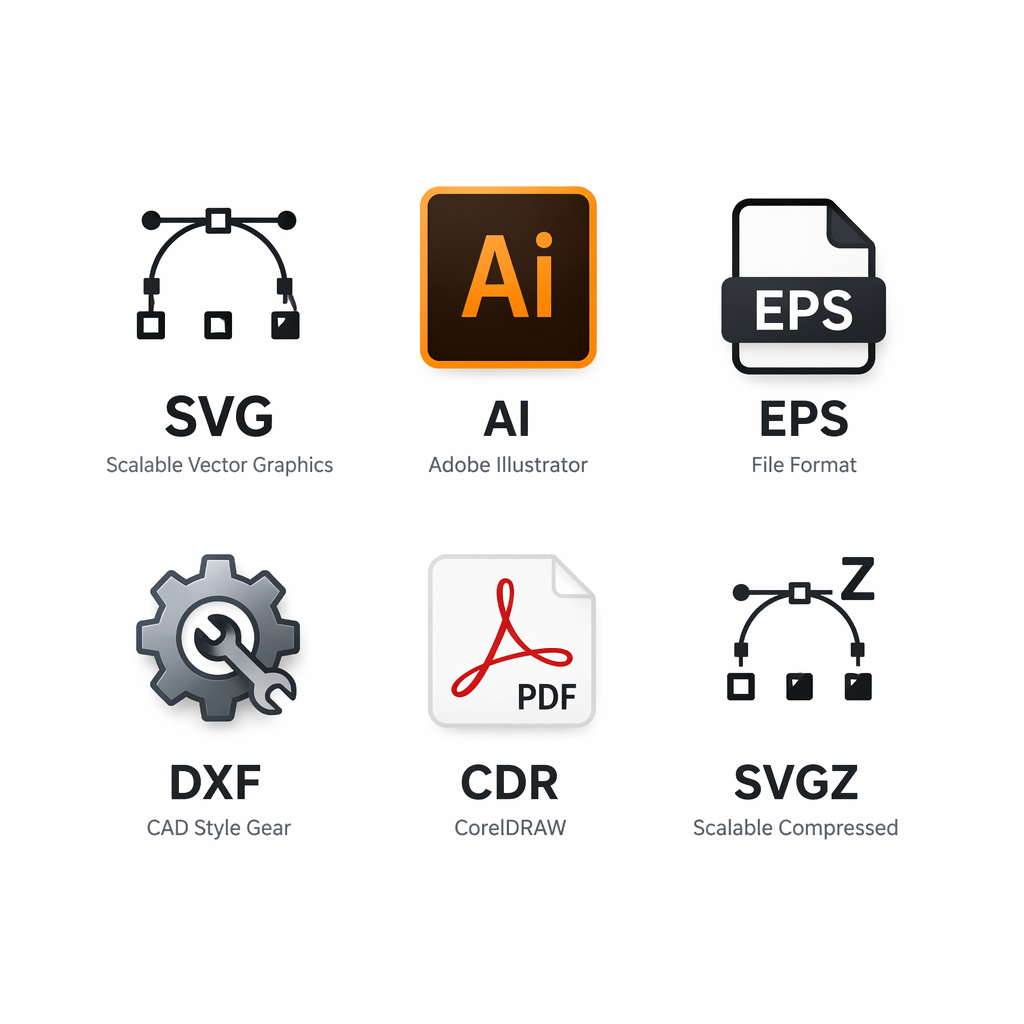
A professionally designed logo exists as a vector file (AI, EPS, or SVG). Vector graphics store the logo as mathematical paths rather than pixels, meaning the mark can be reproduced at any size with no quality loss. This is not optional for serious business use. Any logo that will appear on print materials, signage, embroidery, or official documentation must exist as a vector. If your designer cannot deliver one, the logo was built from a template
2. The same logo may belong to someone else
Template and crowdsourcing platforms license logo designs, not assign them. This is a critical distinction. When you purchase a logo through a template platform, you receive a license to use that design but the platform may license the same base design to other users in different markets, different colours, or even the same industry.
For a small business operating locally with no plans to scale, this may be an acceptable risk. For any business that intends to register a trademark, raise investment, or expand into new markets, it is a serious problem. Trademark registration requires that a mark be distinctive and exclusively yours. A licensed template design that exists in various forms across a platform's user base may not meet that standard and discovering this during a trademark application or due diligence process is expensive to resolve.
3. Copyright may never have been transferred
Copyright in original creative work defaults to the creator in most legal jurisdictions not the person who commissioned the work, unless a written assignment agreement says otherwise. Many cheap logo services operate on a license model: you pay for the right to use the design, not for ownership of it.
This matters most at the moments businesses are least expecting it: when a business is acquired and the acquirer's lawyers conduct intellectual property due diligence; when the business seeks investment and a shareholder agreement requires IP ownership to be confirmed; or when the business attempts to register a trademark and discovers the underlying artwork is not legally theirs.
Professional logo design services include a written copyright assignment clause as standard. Before commissioning any logo work, confirm in writing that full ownership transfers to you on final payment not a license, but an assignment.
4. No colour codes mean no consistent reproduction
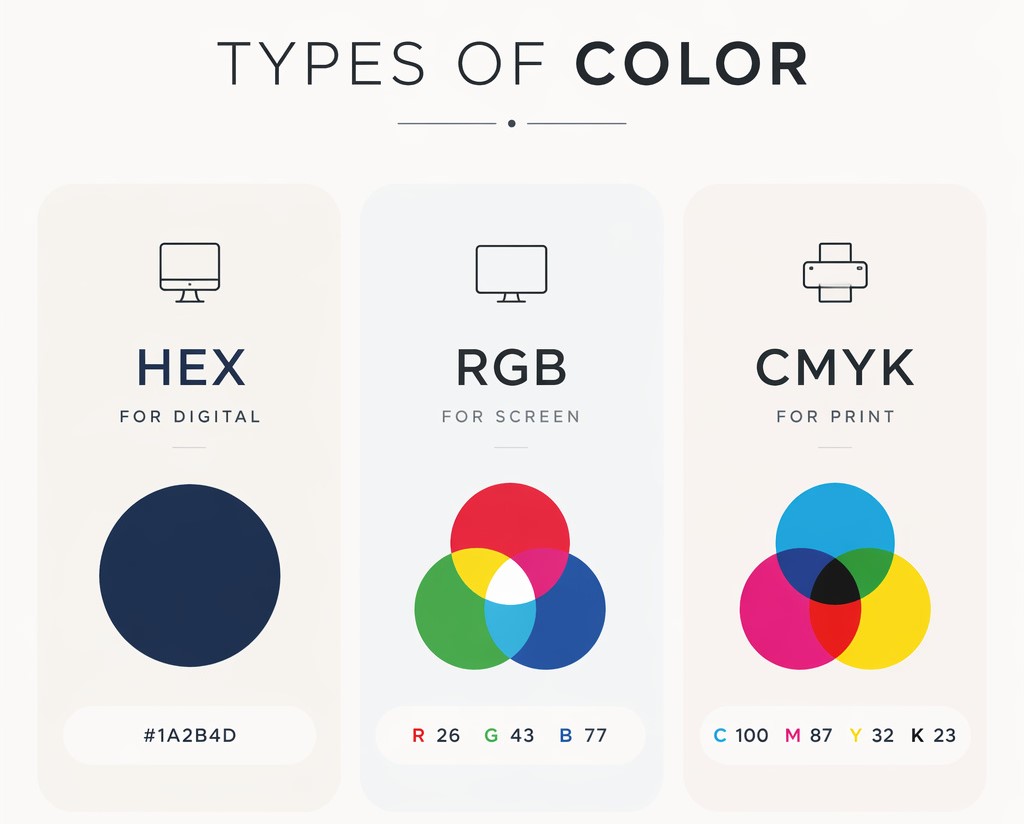
A logo without documented colour codes HEX for digital, RGB for screen, CMYK for print cannot be reproduced consistently across different suppliers and applications. Every print shop, every new designer, every web developer who touches the brand will interpret "the blue" differently without an exact reference. Over time, the logo appears in slightly different shades across different materials, and the visual inconsistency accumulates into something that reads as unprofessional regardless of how strong the original mark was.
Professional logo design services provide colour codes for every colour in the logo as a standard deliverable. It takes minutes to include and saves an enormous amount of rework, argument, and inconsistency across the life of the brand.
5. The mark reflects a generic aesthetic, not your business
Template logos are selected, not designed. The process is: browse a library of pre-made marks, choose one that feels adjacent to your industry, customise the name and colour, download. What this produces is a logo that looks like every other business that made the same selection from the same library. It communicates industry category rather than specific brand which is the opposite of what a logo is supposed to do.
A professional logo design process begins with questions: Who is your customer? What do your competitors look like? What should someone feel when they see your brand? What do you want to communicate that your competitors are not communicating? The answers inform a brief, and the brief shapes an original design. The result is a mark that belongs specifically to your business, not one that belongs to a stock library and happens to have your name on it.
How to evaluate logo design companies and know you are getting real value
Comparing logo design companies on price alone tells you nothing useful. These are the criteria that actually separate professional services from cheap ones.
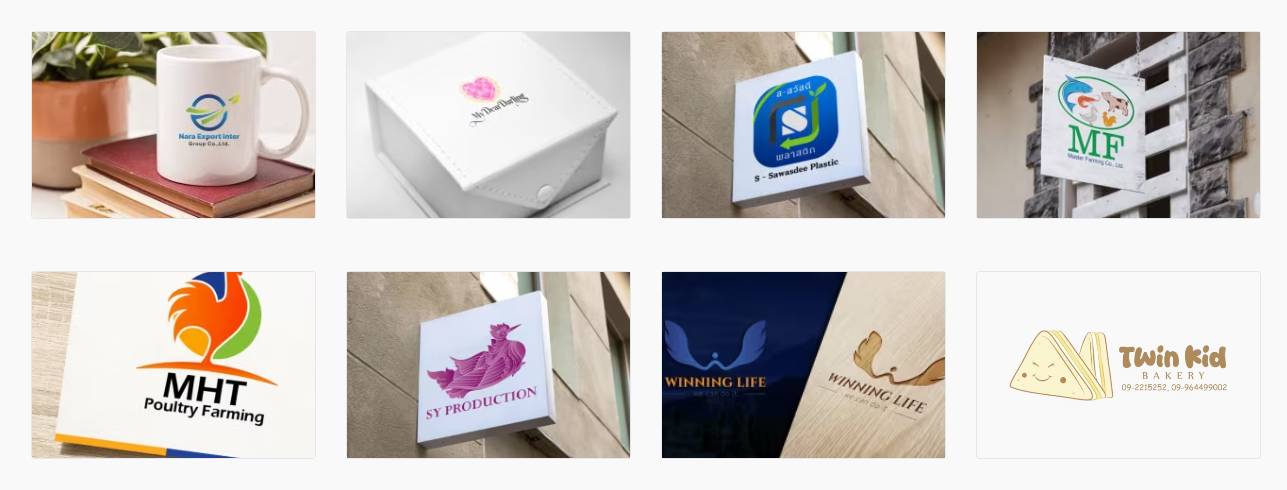
The portfolio shows custom work, not template repetition
Scroll through a logo design company's portfolio with a critical eye. Do the marks look stylistically diverse across different clients? Or do they share recognisable design patterns, the same icon styles, the same typography treatments, the same compositional approaches? Template-based studios often show many logos that are clearly variations on a small number of base layouts. Custom design shows genuine variety.
They ask questions before designing anything
A professional logo design service begins with a brief either a questionnaire or a discovery conversation before any concepts are developed. If an agency skips the brief process and moves straight to "pick your colours and style," they are using a template workflow, not a custom design process.
Copyright transfer is written into the contract
Ask to see the contract or service agreement before signing. Confirm that copyright in the final logo transfers fully to you upon final payment. If the agreement describes a license rather than an assignment, ask for it to be changed. Any reputable logo design company will accommodate this as standard.
File format delivery is specified upfront
Before you commit, ask which file formats you will receive. You need: an editable vector source file (AI or SVG), an EPS for print use, a PNG on a transparent background in multiple sizes, and a JPEG. If the answer is vague or omits the vector source file, the deliverable will not be professionally usable.
Revision rounds are defined, not open-ended
"Unlimited revisions" sounds appealing but is usually a sign that the process has no structure. Professional services define the number of revision rounds included in the scope typically two to three and handle additional changes as a documented extra. This protects both parties and ensures the project has a clear endpoint.
Logo design pricing tiers: what each level of investment actually delivers
Rather than comparing numbers, it is more useful to understand what each price tier delivers in terms of process, outputs, and rights.
- At the entry level template platforms and ultra-low-budget freelancers you receive a modified stock asset, limited or no file exclusivity, raster files only, no written brief process, and no brand guide. This tier is appropriate for a brand-new solo business that needs a placeholder mark quickly and has no immediate plans to print at scale, register a trademark, or seek investment.
- At the mid level skilled independent designers you receive custom original work, a complete file set including vectors, limited revision rounds, and usually no brand guide. Copyright transfer depends on the individual designer's contract. This tier is appropriate for an established small business that needs a clean custom mark but does not yet require a full brand identity system.
- At the professional level logo design agencies you receive a structured brief and discovery process, multiple original concepts, documented revision rounds, all required file formats including editable source files, written copyright transfer, and typically a brand guide or style document. Long-term support is available. This tier is appropriate for any business that plans to scale, register its brand, seek investment, or use the logo consistently across multiple channels and suppliers.
The question is not which tier is cheapest. It is which tier matches what the business actually needs the logo to do.
When to bundle logo and website design: and when to keep them separate
Logo and website design are often offered as a combined package. Bundling makes sense under specific conditions and creates problems under others.
Bundle when: the business is launching with no existing brand or web presence. In this case, building both under one brief ensures visual consistency from day one the website is designed from the brand guidelines developed in the logo phase, so typography, colour, and tone are coherent without requiring coordination between two separate suppliers.
Keep them separate when: the business already has a working website and needs a brand refresh only, or already has a strong brand and only needs a new site. In these cases, bundling forces a dependency that does not add value.
If you are considering a combined brief, evaluate the agency's portfolio in both disciplines independently before committing. An agency strong in web design but average in brand identity produces a weak brand regardless of the bundle price. The output of each discipline should stand on its own merits