



Why Ecommerce SEO Isn’t Like Regular SEO: The Key Differences Businesses Need to Understand

Why Ecommerce SEO Isn't Like Regular SEO: The Key Differences Businesses Need to Understand
Ecommerce SEO is often misunderstood as simply “regular SEO for online stores.” While both strategies share the same foundation, improving search visibility, attracting organic traffic, and increasing conversions, ecommerce SEO requires a completely different approach.
A traditional business website may focus on ranking service pages, blog content, and local searches. An ecommerce website, however, needs to optimize hundreds or even thousands of product pages, manage category structures, improve shopping experiences, and turn search traffic into actual purchases.
Understanding the difference between ecommerce SEO and regular SEO is essential for businesses that want sustainable organic growth and higher revenue from search engines.
What Is the Difference Between Ecommerce SEO and Regular SEO?
The biggest difference between ecommerce SEO and regular SEO is the goal behind the optimization strategy.
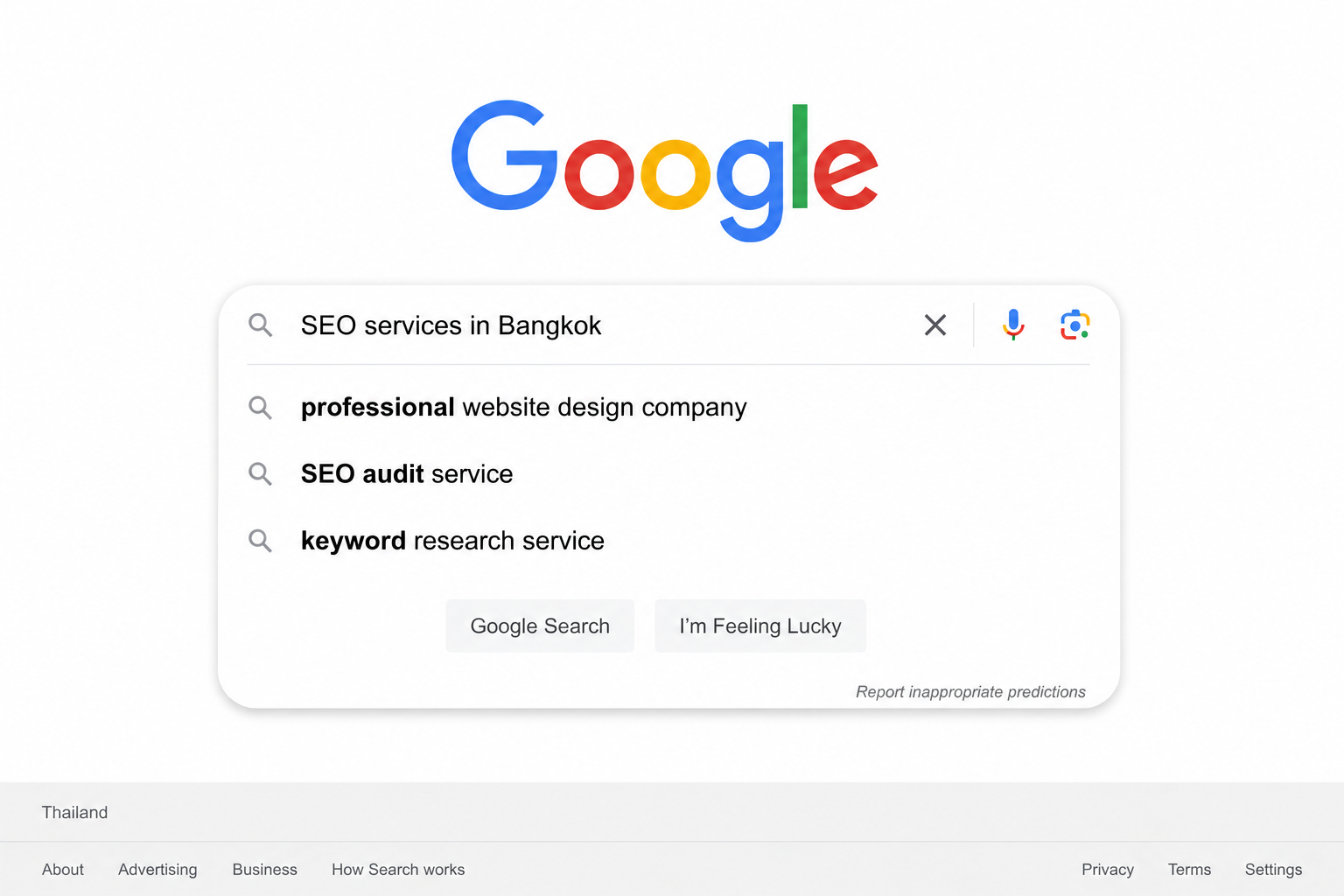
Regular SEO typically focuses on increasing visibility for informational or service-based searches. For example, a digital agency may optimize pages for keywords like “SEO services in Bangkok” or “professional website design company.” The goal is usually to generate leads, phone calls, or inquiries.
Ecommerce SEO focuses on driving customers who are ready to buy products. The strategy targets commercial and transactional keywords such as:
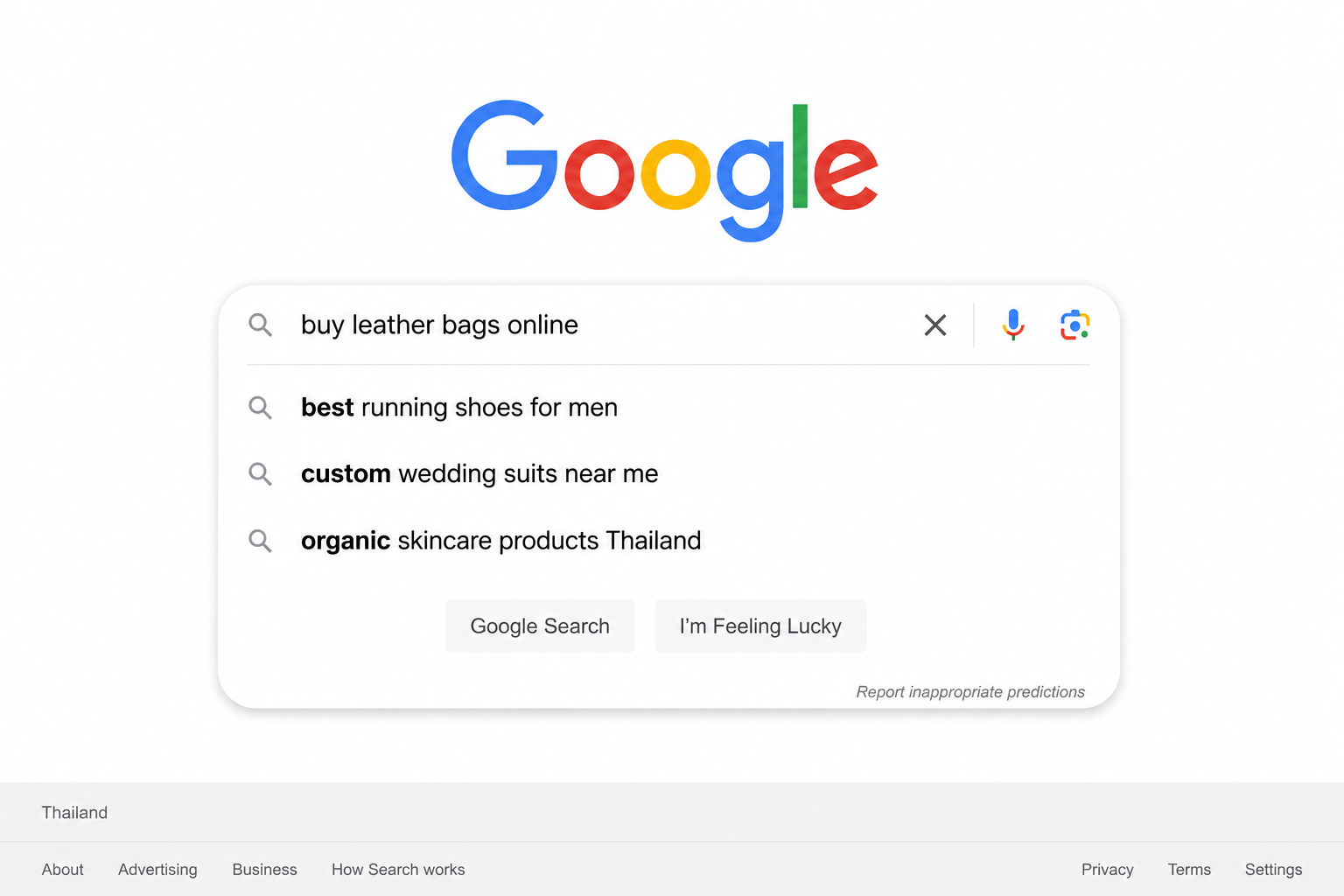
- “buy leather bags online”
- “best running shoes for men”
- “custom wedding suits near me”
- “organic skincare products Thailand”
Instead of only attracting visitors, ecommerce SEO must guide users through the entire buying journey — from product discovery to checkout.
Key differences between ecommerce SEO and regular SEO:
| Regular SEO | Ecommerce SEO |
| Focuses on services, information, or brand awareness | Focuses on products and sales |
| Usually has fewer pages | Can have thousands of product pages |
| Targets leads and inquiries | Targets purchases and revenue |
| Content-driven strategy | Product, category, and conversion-driven strategy |
| Smaller website structures | Complex website architecture |
Ecommerce SEO Requires Advanced Website Structure Optimization
One of the biggest challenges with ecommerce SEO is managing website structure.
A typical business website may have:
- Homepage
- About page
- Service pages
- Blog articles
- Contact page

An ecommerce website often includes:
- Homepage
- Product categories
- Subcategories
- Individual product pages
- Filters
- Product variations
- Reviews
- Inventory pages
Without proper structure, search engines may struggle to understand which pages are important.
A strong ecommerce SEO structure usually follows a clear hierarchy:
Homepage → Category Pages → Subcategory Pages → Product Pages
For example:
Men's Fashion
→ Men's Suits
→ Wedding Suits
→ Custom Black Wedding Suit
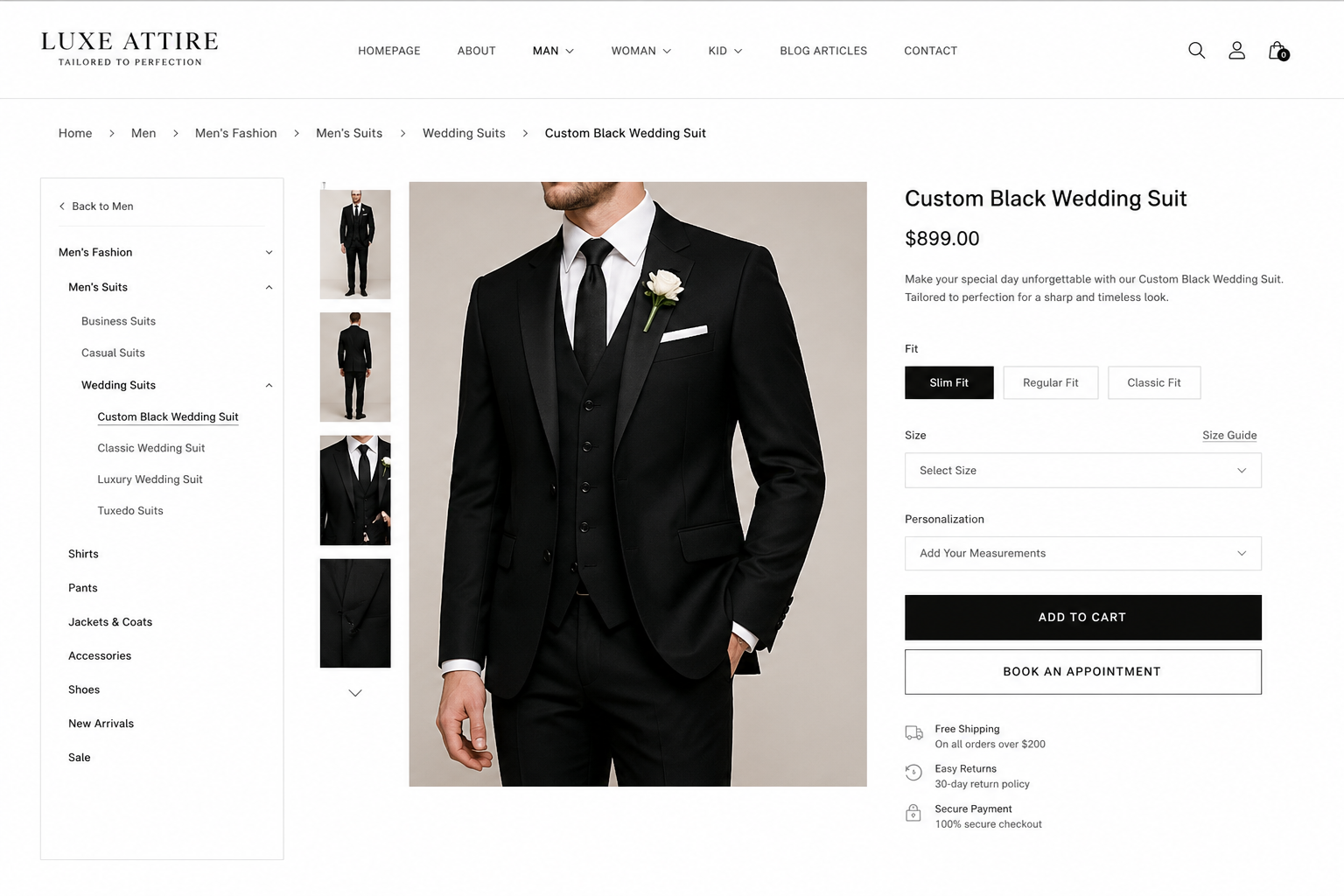
This structure helps Google understand relationships between pages and improves the chance of ranking for relevant searches.
Product Page SEO Is More Important Than Standard Website Pages
In regular SEO, businesses often focus heavily on service pages and blog content.
For ecommerce websites, product pages are the most valuable assets because they directly influence purchasing decisions.
A properly optimized product page should include:
SEO-Friendly Product Titles
Product titles should clearly describe what customers are searching for
| Weak example: | Better example: |
| “Classic Collection” | “Premium Custom Tailored Wool Suit for Men” |
The second title provides more context and matches search intent.
Unique Product Descriptions
Many ecommerce websites copy manufacturer descriptions, which creates duplicate content issues.
A strong product description should explain:
- Product benefits
- Materials
- Features
- Usage situations
- Customer problems it solves
For example:
Instead of:
“Made from high-quality cotton fabric.”
Use:
“Designed with breathable premium cotton fabric, this shirt provides all-day comfort while maintaining a polished professional appearance.”
Product Schema Markup
Ecommerce SEO also relies heavily on structured data.
Product schema helps search engines understand:
- Product name
- Price
- Availability
- Reviews
- Ratings
- Brand information
This can improve visibility through rich search results, making products more attractive before users even visit the website.
Ecommerce SEO Focuses More on Conversion Intent and Buyer Journey
Regular SEO often measures success through:
- Rankings
- Organic traffic
- Visibility
Ecommerce SEO must also focus on:
- Add-to-cart actions
- Conversion rate
- Revenue from organic traffic
- Product engagement
- Customer acquisition cost
Ranking #1 is valuable, but ranking for the wrong keyword does not generate sales.
For example:
| A keyword | Intent |
| “what is leather” | may bring traffic but has low buying intent. |
| “buy handmade leather wallet online” | shows strong purchase intent. |
Successful ecommerce SEO identifies keywords based on where customers are in the buying journey.
Typical ecommerce search journey:
Awareness Stage
- “best office chair for back pain”
Consideration Stage
- “ergonomic office chair comparison”
Purchase Stage
- “buy ergonomic office chair online”
Ecommerce SEO needs to target all stages while prioritizing keywords that generate revenue.
Ecommerce SEO Requires Continuous Optimization at Scale
Unlike regular websites, ecommerce websites constantly change.
New challenges include:
- New products being added
- Products going out of stock
- Seasonal campaigns
- Price changes
- Duplicate category pages
- Filter-generated URLs
- Customer reviews
- Product variations
A successful ecommerce SEO strategy requires ongoing monitoring and improvement.
Important areas include:
Technical SEO
- Website speed optimization
- Mobile performance
- Crawl management
- XML sitemap optimization
- Canonical tags
- Indexing control
Content Optimization
- Category page content
- Product descriptions
- Buying guides
- Comparison articles
- FAQ sections
User Experience Optimization
- Easy navigation
- Clear product information
- Fast checkout process
- Mobile-friendly design
Google increasingly evaluates websites based on user experience, meaning ecommerce SEO is not only about keywords — it is about creating a website that helps customers make decisions quickly
Final Thoughts
Ecommerce SEO is not simply regular SEO applied to an online store. It requires a deeper understanding of products, customers, website architecture, and purchasing behavior.
While regular SEO helps businesses become visible online, ecommerce SEO is designed to turn visibility into measurable business growth.
For online stores competing in crowded markets, a specialized ecommerce SEO strategy is the difference between attracting visitors and generating consistent sales.