


How to Get ChatGPT, Gemini, and Perplexity to Cite Your Brand




You cannot send a keyword list to a model and wait for a citation. ChatGPT, Gemini, and Perplexity do not sell a brand-mention slot the way Google Ads sells a click. They answer from pages they can retrieve and from facts that agree across sources. Guaranteed AI citations are a sales line, not a method.
The question usually arrives when a buyer uses an assistant to pick a supplier. Make the entity unambiguous, publish pages worth quoting, mark them up so a machine can parse them, then earn a few independent mentions. Fake press and mass directories do the opposite.
Short answer: one entity page, matching profiles, pages that answer a real question, schema that matches the visible text, and a small number of third-party mentions. Re-check the same prompts. Skip citation farms.
We use a simple internal sequence we call the AI Citation Readiness Framework: Entity → Useful Answer Page → Machine-readable Structure → Independent Mentions → AI/Search Visibility. It is a checklist order, not a product name and not a guarantee of ChatGPT citations, Gemini citations, or Perplexity citations.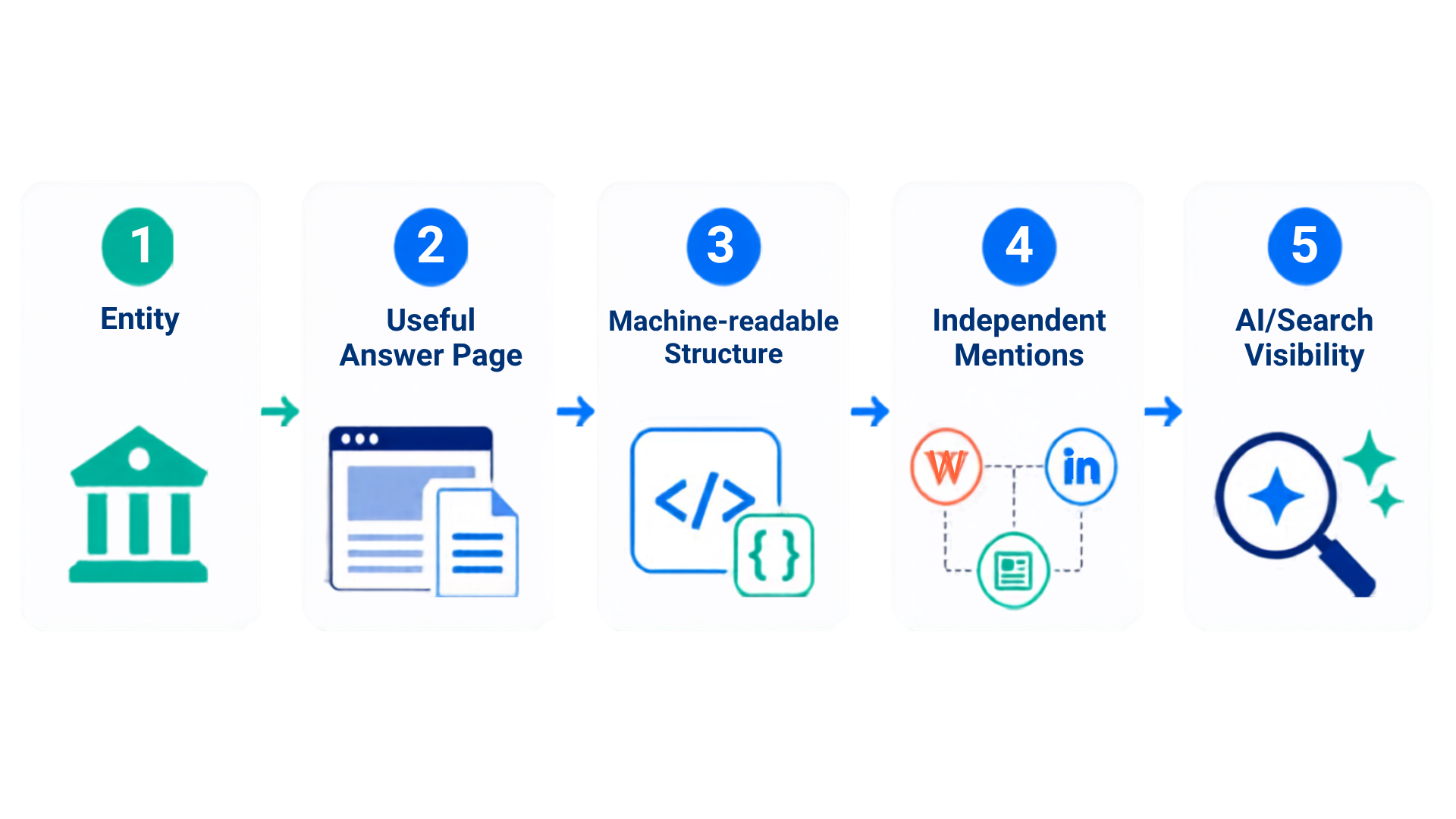
What “cited” means on each tool
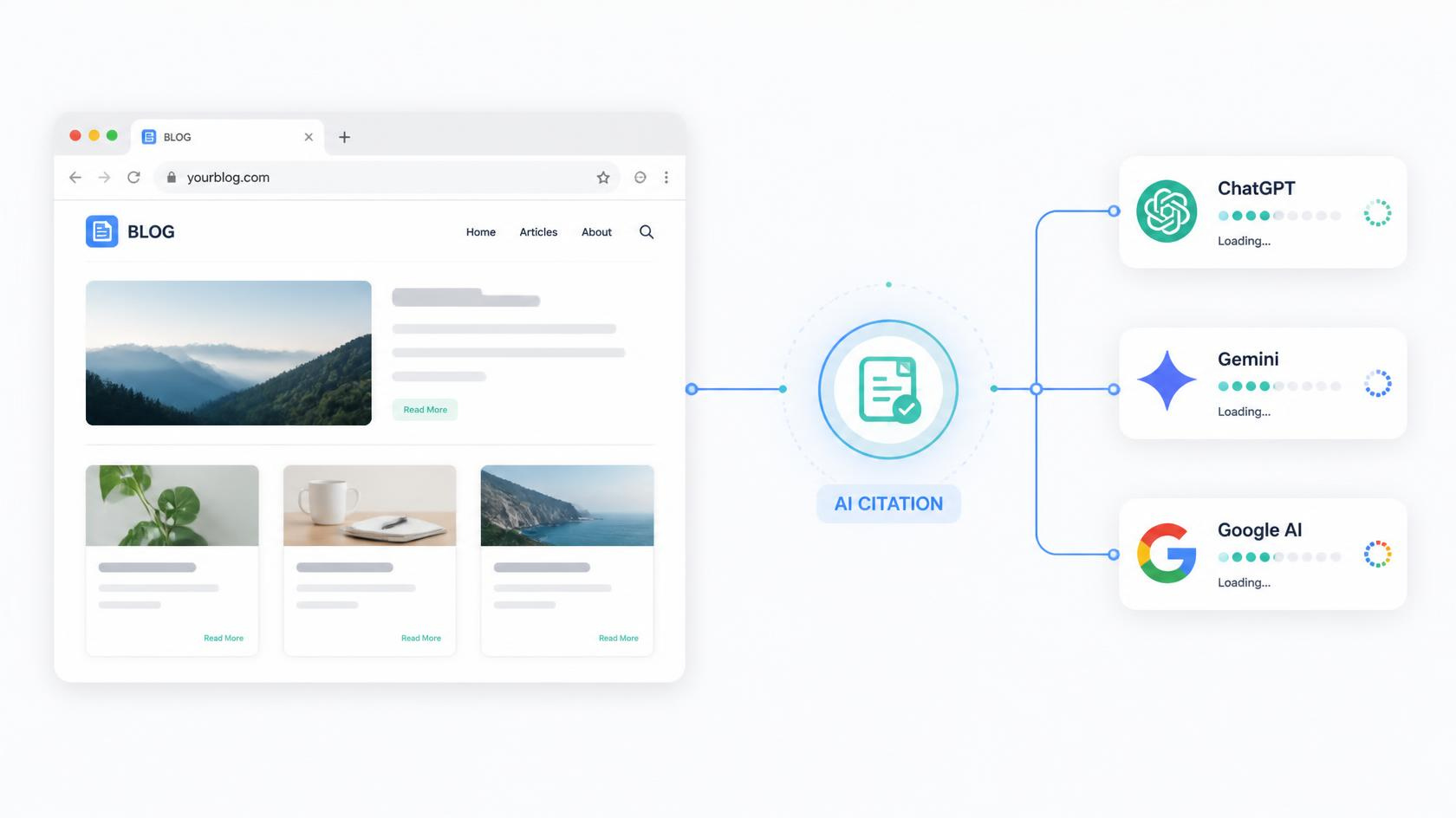
A citation is a named source, a link, or a brand used as the answer. It is not a ranking, and it is not an undated screenshot from one chat. AI brand citations and AI search visibility are related but not identical: one names you; the other is whether assistants can find and reuse a page you own.
The products differ, and the interfaces change. Perplexity is built to show sources, so a crawlable page has a clearer path to a visible link. Gemini, and Google’s AI answers beside Search, may cite a page, a knowledge-style fact, or a mix. ChatGPT sometimes answers with no links, sometimes with browsing, and sometimes from a snapshot that is not today’s homepage. A citation is not a forecast.
Do not treat brand search, a list you wrote yourself, or AI referral traffic as the same thing. The referrer is often missing.
For the vocabulary, read how AEO, GEO, and SEO differ. This article is the operating sequence. How the work is scoped lives on our AEO and GEO services page. This post does not replace that page and does not set a price.
Start with an entity page, not a slogan
Models match a brand to facts: legal name, trading name, what you do, where you do it, and which URL is the official source. If those facts disagree, the safe move is to skip you or to blur you. Schema will not repair a split identity.
An entity page is usually About, or a short homepage block plus About, written so a stranger can quote it. Pick one name form and use it in the title, body, and footer. An English brand, a Thai brand, and a Department of Business Development name can all be real — pick the form you want cited. Say what you do and who it is for: industry, city, language. Bangkok, in Thai and English, is enough. Slogan copy is not a fact. Link only services you sell. If you have a public place of business, the address and Google Business Profile should agree. If you are remote-only, say so. Put a real phone, form, or email on the page.
Then fix profiles that already get copied: Google Business Profile, LinkedIn, directories you already claimed. A new directory with copied text is noise. Thai firms often circulate a legal name, a brand, and a LINE display name. Repeat the citation form on the entity page and the service page, including one Thai form if you publish Thai. English and Thai pages that describe different offers get skipped. Leave off awards and testimonials you cannot document.
Publish pages a model can quote
Assistants quote pages that answer without a hunt. A brochure that never states the offer in the first screen loses to a shorter page that does.
For each service you want mentioned, write what it is in the buyer’s language. Match the query; do not only machine-translate the heading. Say who it is for and who it is not — a clinic, a hotel, and a factory do not share one page. Describe the work in steps a stranger can follow. State what you will not promise, including a ChatGPT citation. Keep a last-reviewed note. Retire lists of tools that have been renamed or shut down.
Do not publish extra pages whose only job is to sit “ChatGPT” next to your brand. One page per offer is easier to cite. Link only to URLs that already exist, including how AEO and GEO are changing search. Start from questions a buyer would type, answer in the first paragraphs, then read the page aloud. If a tool shows a source, the same person may click. The page has to survive that click.
Schema helps parsing. It does not force a citation
Structured data tells a machine how a page is organized. It does not place you inside ChatGPT. Organization — or LocalBusiness if you have a public location and hours you will keep accurate — belongs on the entity page, with name, URL, logo, and sameAs to profiles you control. Service markup belongs on service pages. FAQPage is only for questions visible on that page; this article marks up the questions at the bottom, which are also headings. Do not invent a product SKU so a test looks busy.
If the visible phone and the schema phone differ, fix one the same day. The page must be public, and the answer must be in HTML, not an image of text. Titles, internal links, and a page Google can fetch still matter, because several assistants lean on pages search already knows. A new label does not replace that work.
Digital PR versus citation spam
People searching for รับทำ AEO, รับทำ GEO, or “aeo geo” are often sold a pile of articles. The articles are not the job. The job is to become a source a cautious system can reuse without getting the facts wrong.
Digital PR is a page you do not own that mentions a specific fact: a project, a membership, a talk, a correction of a public claim. Citation spam fakes that at volume: “as seen on” logos for sites that never wrote about you, guest posts whose only purpose is to insert your brand, identical directory submissions, and AI-written “best agencies” posts on rented domains. Fake case-study numbers belong there too. If you do not have a measured result, do not print one. A process story without a made-up percentage is usable. A fabricated figure fails when a buyer asks for the export.
A Bangkok SME does not need a newsroom. Earn one or two mentions you can stand behind — an association you qualify for, a supplier profile, a client who will describe the work without invented outcomes, a talk with a public recording. If you cannot earn one, still fix the entity page. Do not fake the mention. Decline any offer that sells a fixed count of articles naming you. Do not publish fake brochure comparison lists with no criteria that put you first; transparent researched shortlists with real alternatives and useful information can still be legitimate. Spammy self-ranking lists teach readers and models the domain is a brochure.
A sequence you can run this quarter
Do this in order — the same order as the AI Citation Readiness Framework above. A schema plugin before the pages exist gives you nothing a buyer can quote.
- Write the prompts. Ten questions a buyer would type, including Thai if those buyers matter. Save the wording.
- Ask them in ChatGPT, Gemini, and Perplexity. Note the date, whether sources appear, and who is named. Do not invent a share-of-voice score.
- Fix the entity page so name, offer, and location agree with profiles you control.
- Rewrite or add the one page that should answer the main prompt. Lead with the answer. Link it from the entity page and the service page.
- Add schema that matches that page. If an FAQ is not visible, do not mark it up.
- Earn one external mention a stranger could trust. Ignore domain spreadsheets sold as AEO or GEO.
- Recheck the same prompts after the pages can be fetched. If nothing moved, check crawl and whether a better source already owns the answer.
- Keep ordinary SEO hygiene on those URLs: titles, internal links, a usable mobile page.
How AEO differs from GEO as a purchase, including redesign, is on the AEO and GEO service FAQ. A full redesign is not the usual requirement.
How we test buyer prompts at Digital Agency Bangkok
At Digital Agency Bangkok we test the same buyer prompts across ChatGPT, Gemini and Perplexity before changing a page. We record the date, the prompt, the sources shown, and the brands mentioned, then optimise the pages that should answer. That log supports AI search visibility work without inventing a percentage.
| Prompt (anonymized) | Sources / brands shown | Missing info | Recommended page |
|---|---|---|---|
| Who offers website redesign for a Bangkok clinic? | Directory roundups; one competitor service page | Clear scope, languages, and what is not included | Clinic web design service page with answer-first copy |
| Best AEO / GEO agency for a Thai B2B brand? | Generic “top agencies” posts; few primary sources | Entity clarity and a page that explains the method | Entity page + AEO/GEO explainer the buyer can quote |
Rows like these are planning notes, not performance claims. No ChatGPT citations score is attached.
What is worth checking, and what is theatre
Keep a dated log of the same prompts. Monthly is enough. Watch Search Console for the pages you changed, and any AI referral when the referrer exists. No referrer does not mean zero citations. Ask on the form, or in the first LINE reply, whether the lead found you via an assistant. If a percentage labelled AI visibility arrives with no method, ask for the prompts and screenshots. A result that appears because the user typed your name is not a cold-query citation. Do not write a case study from three chats.
What businesses usually hire an agency to do
Teams that outsource this work are usually buying capacity and judgment, not a magic switch for AI brand citations. Typical deliverables include:
- Entity and brand-consistency audit across the site and the profiles that get copied
- AI-answer opportunity and prompt-topic mapping for the questions buyers actually ask
- Service-page optimisation so the offer is quoteable in the first screen
- Content improvements that answer those prompts without stuffing brand names
- Schema validation that matches visible text
- Technical crawlability checks so assistants and search can fetch the page
- Digital PR and earned-mentions strategy that prefers one solid mention over a pile of spam
- AI citation monitoring via a dated prompt log, not an unverified visibility percentage
That is the practical shape of AEO and GEO work on an existing site. Scope and pricing belong on the service page, not here.
When this is an agency job
Do the first pass in-house if someone can edit the site, read schema, and refuse spam. Bring help in when the site cannot be edited safely, when English and Thai disagree, or when the entity, service pages, and markup should be one job.
Digital Agency Bangkok does that as AEO and GEO services, separate from this article, and not a promise that ChatGPT, Gemini, or Perplexity will name you by a date. Look at the live site before anyone quotes a plan. The FAQ on that page covers how this differs from SEO, whether a redesign is required, and whether a smaller business can start without rebuilding. If the site is slow or unsafe, fix that first. A page that cannot be fetched will not be cited.
Want to know whether your brand is currently visible in AI answers?
We can audit your brand entity, service pages, technical accessibility, and the buyer questions where ChatGPT, Gemini, or Perplexity already cite competitors. Start with our AEO and GEO services overview (including the FAQ), or contact Digital Agency Bangkok with a short brief and the prompts you care about. We will not invent an AI-visibility percentage.