


Why Laravel Is a Better Choice for Real Estate Websites

Many real estate websites start with WordPress because it is easy to use and has a relatively low initial cost. It is often recommended for general informational websites or corporate sites that need to go online quickly. However, as a website grows with more property listings, high resolution images, and increasing numbers of users accessing the site at the same time, platform limitations begin to directly affect performance and user experience.
From the experience of a website development agency that manages both WordPress websites and complex real estate platforms, issues related to speed, data management, and system scalability often become the main reasons businesses begin questioning whether their current platform is still the right fit. This is especially true for websites that serve as a primary channel for lead generation and brand credibility.
This article explains why Laravel is a more suitable choice for real estate websites that require stability, flexibility, and long term scalability. It also includes a real migration case study to help business owners choose the right platform based on their actual goals and growth plans.
Which Types of Websites Is WordPress Best Suited For
WordPress is one of the most popular website development platforms due to its ease of use, familiar admin interface, and wide range of design customization options. For websites focused mainly on presenting information, such as company websites, service introduction pages, or sites with simple content structures, WordPress remains a practical option in terms of budget and development time.
Many companies recommend WordPress for businesses that need an online presence quickly, have a limited number of pages, and do not need to manage large volumes of structured data within a single system. Content updates, blog publishing, and basic information edits can be handled easily without relying heavily on a development team.
However, WordPress becomes less suitable as website complexity increases. When a site needs to manage large datasets, advanced search systems, or integrations with internal business tools, the platform that once felt simple can start to feel restrictive rather than beneficial.
Challenges Real Estate Websites Face When Using WordPress
- Slower performance as listings and images increase
Real estate websites typically contain a large number of property listings with high quality images. As this content grows within WordPress, the system often needs to load multiple plugins and data layers at once. This results in slower load times, especially on mobile devices or slower networks, directly impacting user experience and inquiry rates.
- Heavy reliance on multiple plugins
Core real estate features such as filtered property search, map integration, and listing management usually require multiple plugins working together. As plugin usage increases, site stability decreases. Each update carries the risk of conflicts, and troubleshooting becomes more complex without direct developer involvement.
- Limited flexibility for custom user experience and workflows
An effective real estate website should reflect real user behavior, such as searching by location, price range, or property type. On WordPress, customizing workflows to match business operations is often limited by existing themes and plugins, making it harder to freely design UX and backend systems that fully support business needs.
Why Laravel Is Better Suited for Real Estate Websites
Laravel is a framework designed for complex systems that must handle large amounts of data, making it a strong match for real estate platforms. From property listings and image management to advanced search functions and third party integrations, Laravel allows developers to control system architecture from the ground up, resulting in better performance and long term stability.
One of Laravel’s key strengths is flexibility. Real estate websites can be built around actual business workflows, such as categorizing properties by location, price, or type, without relying on excessive plugins. This leads to a cleaner backend system, easier management, and fewer technical risks over time.
From a user experience perspective, Laravel allows precise control over how content loads and how the system handles concurrent users. This enables smoother browsing, faster response times, and a more seamless journey from search to inquiry, supporting both conversion goals and future business growth.
Comparison Table: WordPress vs Laravel for Real Estate Websites
| Comparison Area | WordPress | Laravel |
| Website suitability | Best for blogs, informational sites, and small websites | Ideal for real estate platforms, large databases, and custom systems |
| Page speed | Slows down as content, images, and plugins increase | Faster performance through optimized, purpose built systems |
| Property data management | Relies heavily on plugins | Custom data structures aligned with business needs |
| Development flexibility | Limited by themes and plugins | Full freedom to customize UX and system logic |
| Long term stability | Risk of conflicts during plugin updates | More stable and scalable for long term growth |
| High traffic handling | May struggle during traffic spikes | Better support for concurrent users |
| Maintenance and scalability | Easy at basic level, complex as system grows | Designed for long term agency or development team support |
Case Study: Sun4U Migrating from WordPress to Laravel
Sun4U is a vacation rental business that has been using WordPress for many years. As property data and booking features became more complex, the existing website began facing limitations in performance, data management, and feature expansion. Digital Agency Bangkok analyzed the original website and planned a migration to Laravel while preserving all existing SEO assets, including URLs, metadata, and Google Search Console settings, to ensure search rankings were not affected.
-
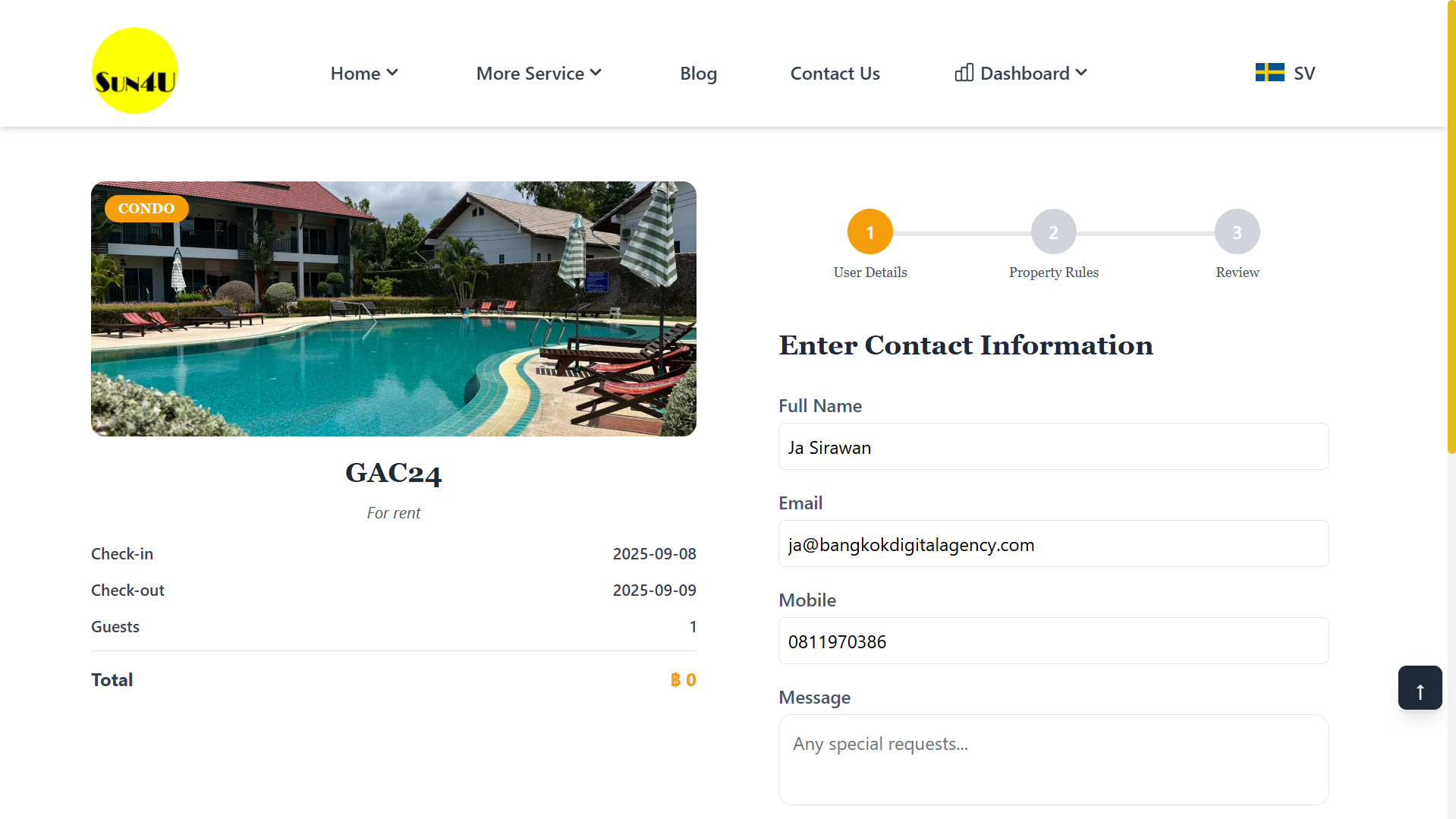
- Sun4U New Website Booking System
-
- Sun4U Search Form and Map listing
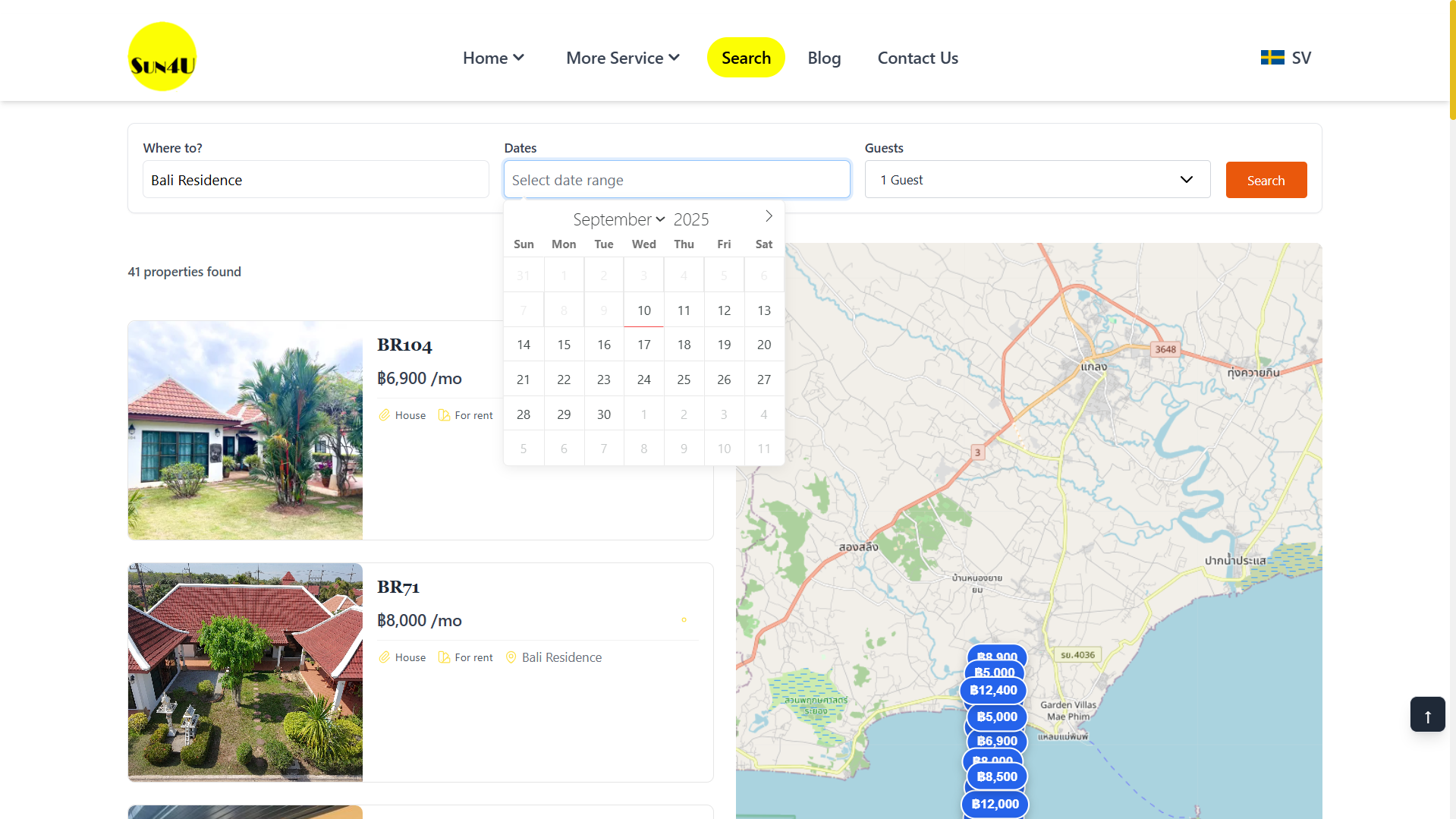
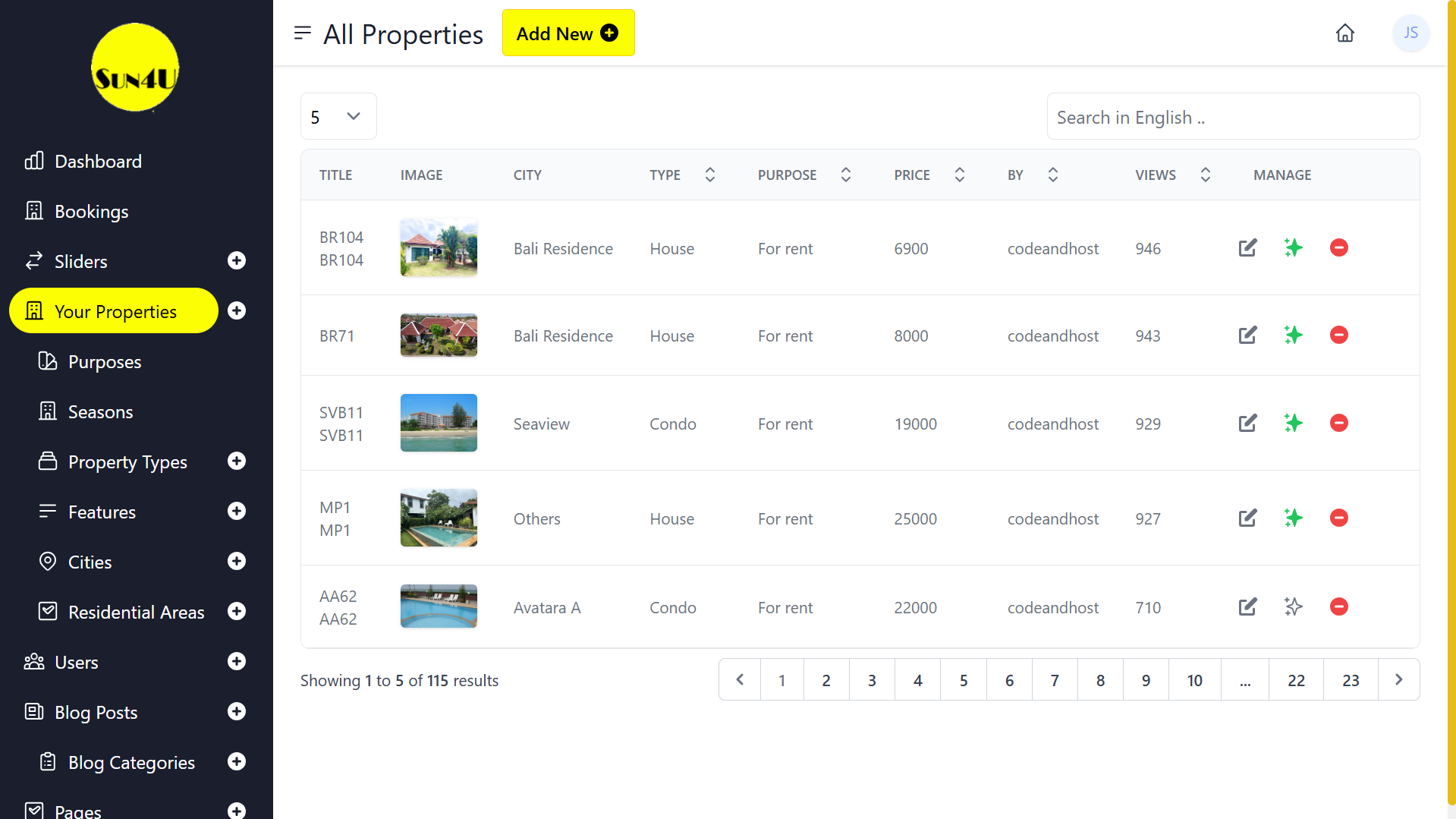
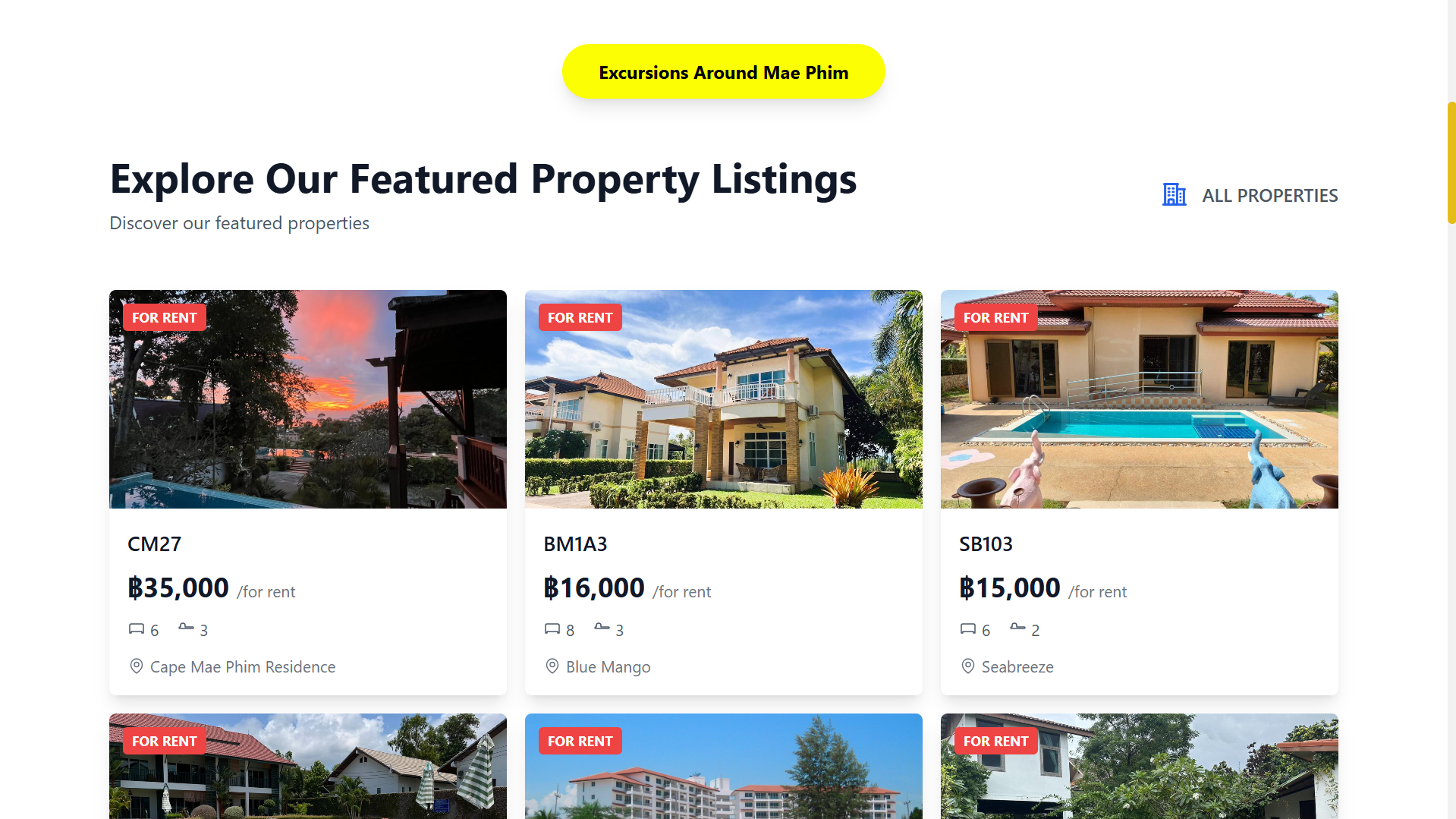
The new website was built using Laravel and Livewire, resulting in a faster, more stable property and booking management system. The frontend was redesigned to improve mobile usability and overall user experience.
After launch, the Sun4U website showed significant improvements in speed, search visibility, organic traffic growth, and online bookings.
Conclusion
Real estate websites that manage large datasets, advanced search functions, and booking systems require a more flexible and efficient structure than general websites. While WordPress works well for informational sites and smaller businesses, its limitations in speed, customization, and data handling can impact both user experience and SEO as a website grows.
The Sun4U case study clearly demonstrates that upgrading from WordPress to Laravel can unlock greater performance, stronger backend control, and improved SEO results without sacrificing existing search rankings.
For real estate businesses, vacation rentals, resorts, or any platform requiring custom functionality, choosing the right technology from the beginning is critical for long term growth. If your website is becoming slow, difficult to expand, or no longer supports your business goals, migrating to Laravel may be a more sustainable solution.
If you are looking for a website development agency that understands WordPress, Laravel, and SEO within the Thai business context, Digital Agency Bangkok is ready to help you plan, upgrade, and build a website that delivers real results.
Contact us for a free consultation
Phone: 098-7655-243 or 098-7655-701
Email: [email protected]