

Why Choose an SEO Agency That Can Code Over One That Can’t




The Limit Every Non-Technical SEO Agency Eventually Hits
Most SEO agencies work within the boundaries of whatever platform a client already has. They optimize meta tags, tweak page titles, publish content, and adjust a handful of settings inside a CMS dashboard, all useful work, right up until the website itself becomes the bottleneck. When the real problem isn't a missing keyword or a thin meta description but a plugin conflict silently breaking links, a site search that returns nothing useful, or a platform that structurally cannot support the features a growing business needs, a non-technical SEO agency runs out of road. They can recommend a fix. They cannot build one.
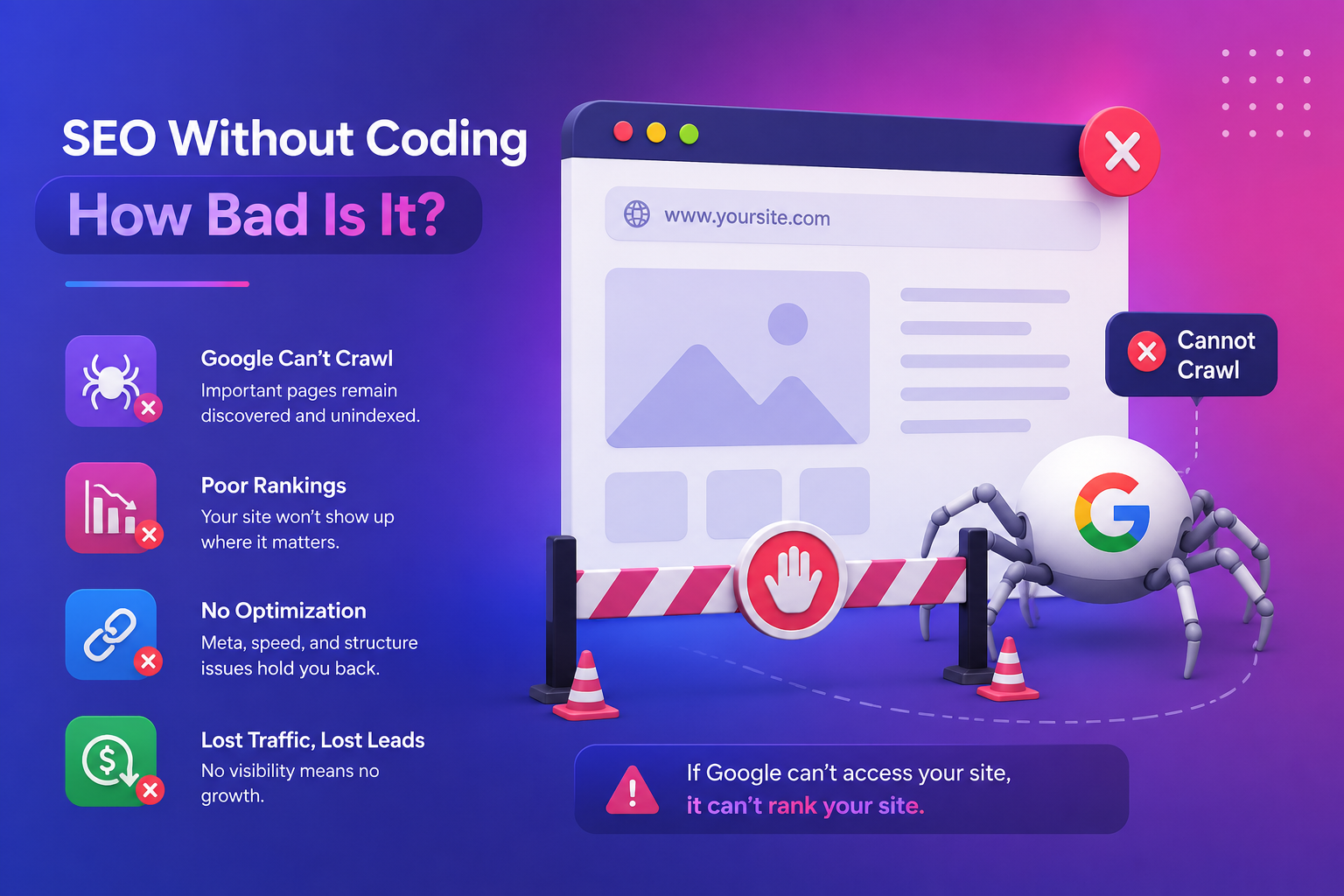
This is the gap that separates an SEO agency from a technical partner capable of actually rebuilding the infrastructure SEO depends on. Search visibility, site speed, crawlability, and user experience are not separate from a website's underlying codebase, they are downstream of it. An agency that can only operate inside a CMS's existing settings panel is permanently limited to surface-level fixes. An agency that can write the migration scripts, rebuild the platform, and re-architect the data underneath it can solve the problem at the level where it actually originates.
Two real estate projects, Casa Pattaya and CondoDee, show exactly what that difference looks like in practice.
What Happens When SEO Advice Runs Into a Platform's Technical Ceiling
Real estate websites are a particularly unforgiving test case for this gap. They typically run on WordPress with a stack of plugins handling search, custom fields, forms, and page building, and they carry thousands of property listings and years of blog content, each with its own SEO-indexed URL. A non-technical agency looking at a site like this can identify the symptoms clearly enough: broken search, slow load times, inconsistent lead capture, unreliable page rendering. What they typically cannot do is trace those symptoms back to their root cause in the codebase, let alone rebuild the platform without breaking the SEO equity the site had already earned.
That last part is the real risk. A poorly executed migration, one handled by a team without genuine engineering capability, is one of the fastest ways to destroy years of accumulated search rankings. URLs change, redirects get missed, content goes missing, and a site that used to rank well simply disappears from search results during the transition. This is precisely why platform-level problems require a team that can code the solution, not just diagnose it.
SEO Agency vs. SEO Agency That Can Code
| Factor | Traditional SEO Agency | SEO Agency That Can Code |
| Scope of work | Content, metadata, keywords, on-page settings within an existing CMS | Full platform architecture, custom application development, plus content and SEO strategy |
| Fixing a broken plugin stack | Recommends disabling or replacing plugins | Audits the actual code, traces the specific conflict, and patches it directly |
| Site search that returns nothing useful | Suggests a search plugin swap | Builds a properly indexed, custom search engine, including AI-powered natural-language search |
| Migrating platforms (e.g., WordPress to Laravel) | Outsources or avoids the project entirely | Writes the migration scripts, preserves data relationships, and maps every redirect |
| Protecting SEO equity during a migration | Limited to advising on best practices | Directly controls redirect logic, URL structure, and crawlability at the code level |
| CRM and lead-capture integration | Relies on third-party plugins or manual handoffs | Builds or integrates a CRM directly into the platform for real-time lead flow |
| Custom features (dashboards, AI tools, booking flows) | Not possible without a separate development vendor | Delivered in-house as a natural extension of the same platform |
| Risk during platform changes | Higher, dependent on how well a third-party developer executes the technical work | Lower, the same team diagnosing the problem also controls the code fixing it |
| Best suited for | Simple sites needing content and metadata support | Growing businesses whose website has hit a genuine technical ceiling |
The pattern here is straightforward: a traditional agency's ceiling is a CMS's settings panel. A coding-capable agency's ceiling is whatever the business can imagine building next.
Case Study: Casa Pattaya - Rebuilding the Platform, Not Just the Content
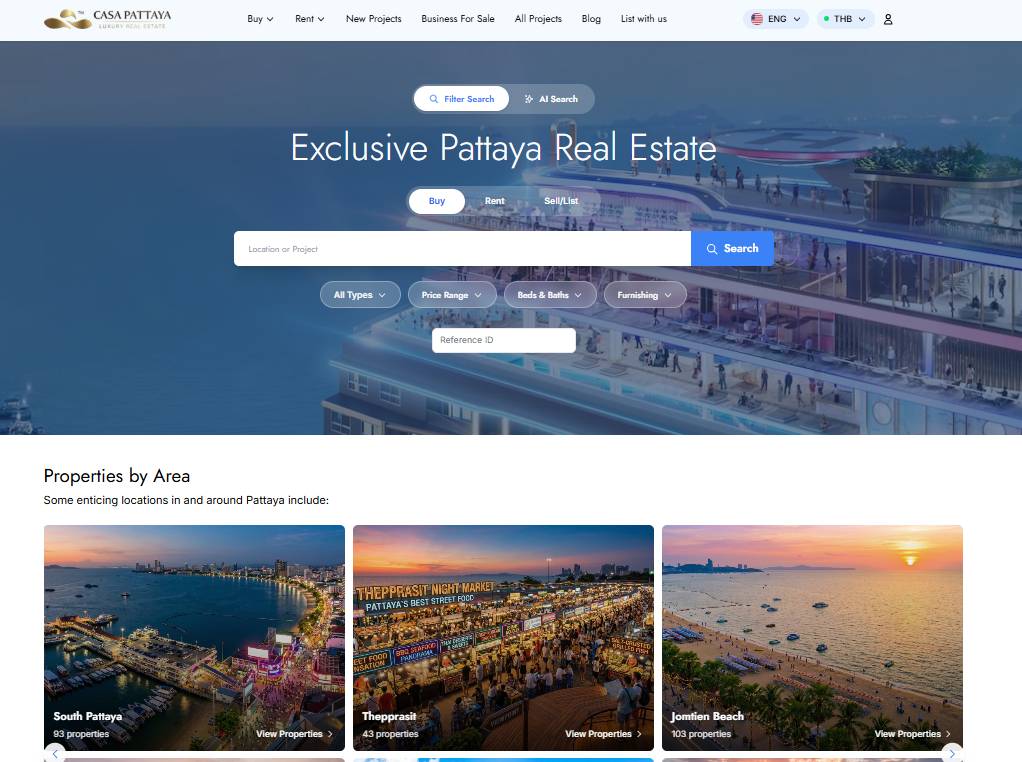
Casa Pattaya's WordPress site had reached the ceiling of what a plugin-based CMS could reasonably support for a high-volume luxury property brand. Site-wide search regularly returned irrelevant results or nothing at all. The design carried the unmistakable look of a stock WordPress theme, undermining the premium positioning the brand needed to compete for high-value buyers. And there was no consistent path from browsing a listing to becoming a lead, contact forms were scattered and disconnected from any system the sales team could actually work from.
A conventional SEO agency could have suggested a better theme, a caching plugin, or a search plugin upgrade. Instead, the technical solution required moving the entire site off WordPress and onto a custom-built Laravel and Livewire application, a decision that gave the team full control over data structure, routing, and performance, free of the plugin sprawl that had accumulated over years.
The migration itself was handled through custom Laravel Artisan console commands, purpose-built to connect directly to the legacy WordPress database, read every blog post and property listing, and transform each record into a new schema, while supporting a dry-run mode so nothing was written until the output was fully reviewed. Every migrated post and property automatically registered an old-URL-to-new-URL redirect as part of the same migration run, protecting the SEO equity the brand had already built rather than treating redirects as an afterthought.
Once the migration was validated and complete, the same technical foundation was used to keep building: a properly indexed site search that finally returned relevant results, an AI-powered natural-language search layer on top of it, a dedicated "List With Us" acquisition page for property owners, and a built-in CRM for managing leads, all inside the same Laravel application rather than bolted on as disconnected third-party tools.
None of that is achievable from inside a WordPress dashboard. It required a team that could write the migration scripts, design the database schema, and build custom application features from scratch, capabilities that sit entirely outside what a traditional SEO agency offers.
Case Study: CondoDee - Fixing the Root Cause, Not the Symptom
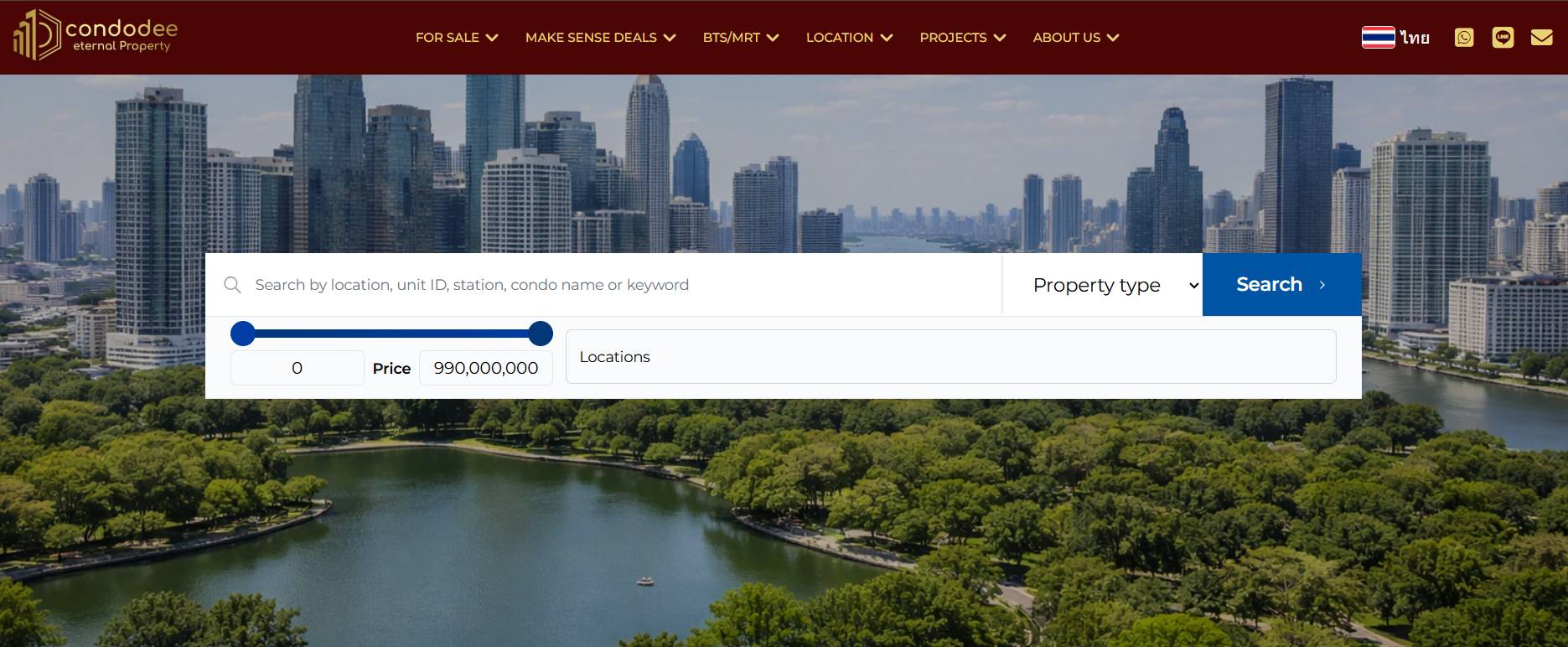
CondoDee's situation illustrates the same gap from a different angle: a site that was actively losing trust and search performance in real time. Its WordPress build had accumulated a fragile stack of plugins, a chat engine plugin, Elementor for page building, and several others handling search, forms, and listings, and the interactions between them were intermittently sending visitors arriving from search engines to broken or dead pages. For a real estate brand competing for six and seven-figure buyers, a site that occasionally failed to load properly was actively costing trust and conversions before a visitor ever reached a listing.
A non-technical agency faced with "random broken links" has very few real options, because the cause wasn't one obvious bug, it was a web of plugin conflicts that only surfaced intermittently. Solving it required auditing the actual plugin stack, tracing the specific conflicts causing the failures, and patching the affected routes and templates directly in the live codebase. That's engineering work, not settings-panel work, and it stopped the damage immediately while the larger platform rebuild was planned in parallel.
With the bleeding stopped, the same technical judgment that diagnosed the plugin conflicts also informed the long-term fix: moving CondoDee off WordPress entirely onto a custom Laravel and Livewire platform, removing the plugin-interaction risk at its source. The migration had to preserve a genuinely complex web of relationships, blog posts, property listings, the comments attached to those listings, and the agent profiles linked to the properties they managed, all migrated in dependency order so nothing was imported before the record it depended on already existed.
The team also moved CondoDee's CRM off a disconnected AWS setup and implemented OroCRM directly on the same Laravel environment, so leads generated on the website landed in the CRM immediately rather than passing through a separate integration layer prone to its own failure points. From there, the same platform supported a rebuilt SEO foundation with clean URL structures and proper heading hierarchy, a Kanban-style property management dashboard, and an AI content tool the internal team could use to generate on-brand property and blog copy from their own custom prompts.
The results were measurable, not theoretical. In the six months following the new platform's launch, the site recorded 8.92K total clicks and 1.36M total impressions in Google Search Console, with an average position of 13.2 in a competitive Bangkok real estate market, performance that held steady and trended upward after launch rather than dipping, which is the more common risk when a full platform migration is handled without real engineering capability behind it.
Why the Coding Capability Changes What "SEO" Actually Means
In both projects, the SEO outcome, preserved rankings, stronger crawlability, better indexing, more relevant search results, improved conversion paths, was inseparable from the engineering work underneath it. Redirect mapping that protects search equity during a migration is a coding problem. A site search that actually returns relevant results is a coding problem. A CRM that captures leads without latency or failure points is a coding problem. None of these are things a traditional SEO agency can deliver by adjusting settings inside an existing CMS, because the constraint isn't configuration, it's the platform itself.
This is the practical distinction worth understanding before hiring an SEO partner for anything beyond a simple content and metadata cleanup: an agency limited to working inside a CMS can only ever address what that CMS allows. An agency that can code can remove the constraint entirely, rebuilding the platform, migrating years of content and data without loss, and then continuing to build the exact features a growing business actually needs on a foundation solid enough to support them
The Underlying Principle
SEO problems that live inside a page's content can be solved with content expertise. SEO problems that live inside a website's architecture, unreliable search, plugin-driven instability, disconnected systems, a platform that has hit its technical ceiling, can only be solved by a team capable of rebuilding that architecture from the ground up. Casa Pattaya and CondoDee both needed more than SEO advice; they needed a team that could migrate thousands of interconnected records without losing a single redirect, then keep building real, custom-coded features on top of that foundation. That is the difference between an agency that optimizes what already exists and one that can build what a business actually needs next.