



Understanding the Importance of the Customer Journey





Understanding the Importance of the Customer Journey
A business can have an excellent product, a well-designed website, and a genuinely talented marketing team, and still lose customers at a rate that seems impossible to explain — until someone actually maps out, step by step, what a real customer experiences from the first moment they hear about the business to the moment they either buy or walk away. That mapping exercise, the customer journey, is one of the more underused but consequential tools in modern marketing and business strategy, precisely because most of what goes wrong in a customer relationship happens in the gaps between departments and touchpoints — gaps that are invisible unless someone is deliberately looking at the journey as a whole, rather than at each isolated interaction on its own.
What the Customer Journey Actually Is
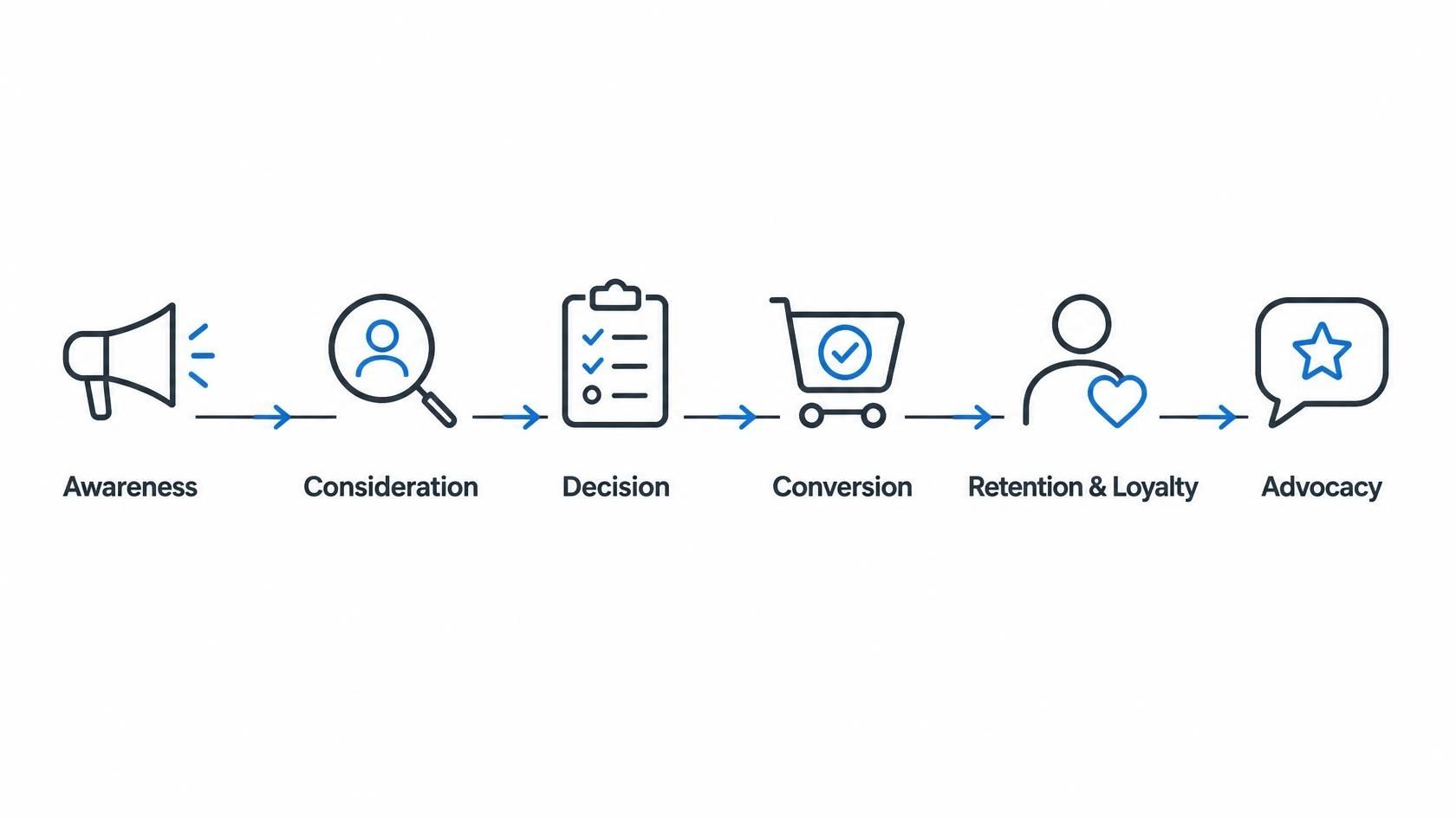
Beyond a Single Purchase Moment
The customer journey refers to the complete sequence of experiences and touchpoints a person moves through in relation to a business — starting well before any purchase, continuing through the decision and transaction itself, and extending into the post-purchase relationship. It's fundamentally different from looking at any single interaction (a website visit, a sales call, a support ticket) in isolation, because a customer's overall impression of a business is shaped by the cumulative experience across all of these moments, not by any one of them alone.
The Typical Stages Involved
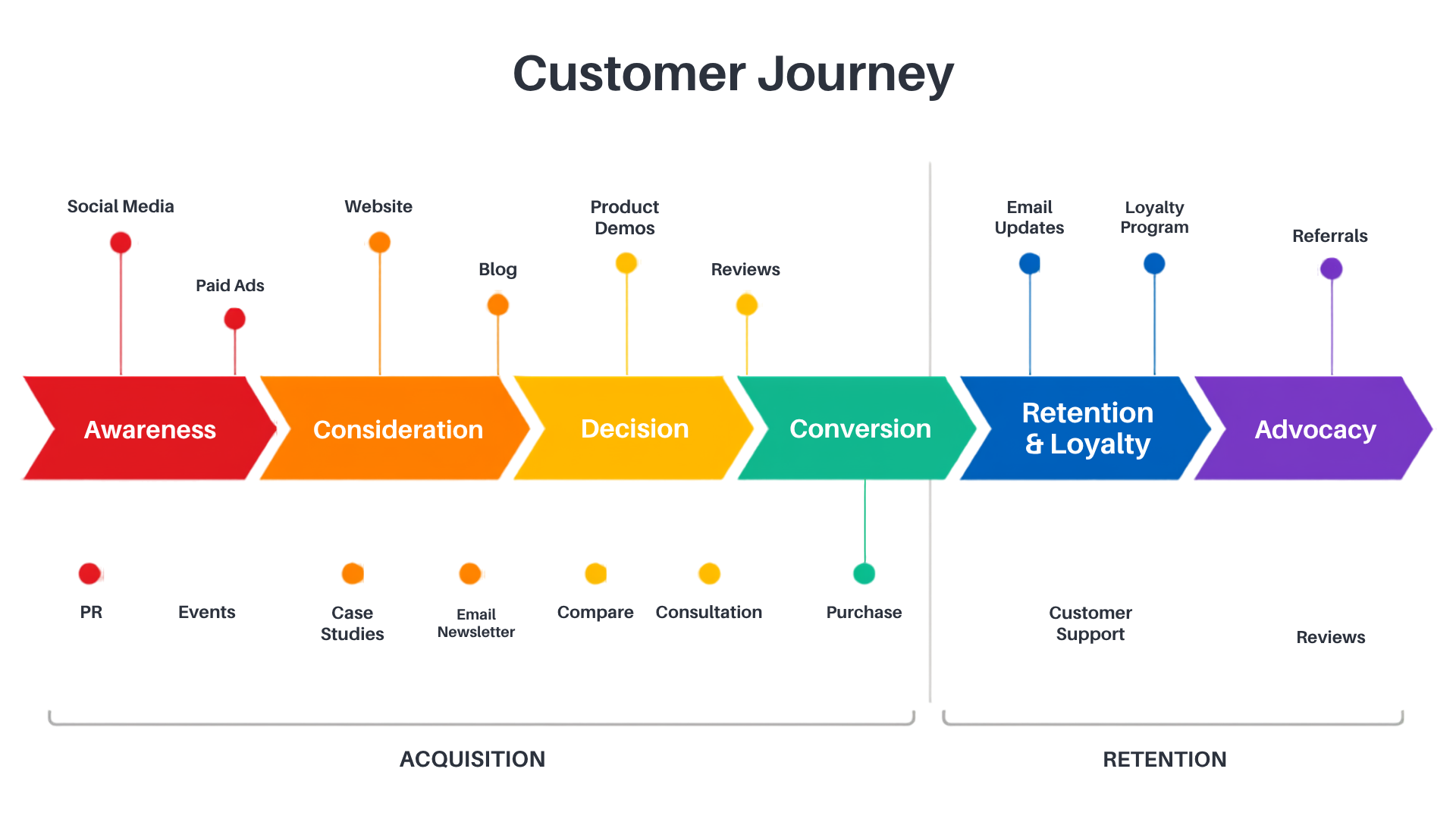
- Awareness
the point at which a prospective customer first becomes aware the business, product, or category of solution exists.
- Consideration
the period during which a prospect actively researches, compares options, and evaluates whether a given solution fits their needs.
- Decision
the moment a prospect commits to a purchase or engagement with a specific business.
- Conversion
the period immediately following a purchase, during which a customer forms lasting impressions about whether the decision was a good one.
- Retention and loyalty
the ongoing relationship after initial use, determining whether a customer continues, repeats, or expands their engagement with the business.
- Advocacy
the stage at which a satisfied customer actively recommends the business to others, extending its reach beyond direct marketing effort alone.
Why Understanding the Customer Journey Matters So Much
It Reveals Problems That Departmental Metrics Miss
Most businesses performance department by department — marketing tracks leads, sales tracks closed deals, support tracks resolved tmeasure ickets. Each department can hit its own targets while the overall customer experience still quietly deteriorates, because the handoffs between those departments are exactly where problems tend to accumulate unnoticed. Mapping the full journey is often the only way to catch these gaps, since no single department's metrics are designed to reveal a problem happening at the boundary between their work and someone else's.
It Clarifies Where Investment Actually Pays Off
Without a clear view of the full journey, businesses tend to invest heavily in whichever stage feels most visible or urgent — often awareness and acquisition — while under-investing in less visible stages like onboarding or retention, even when those stages are actually costing far more in lost customers than acquisition spend is bringing in. Understanding the full journey allows a business to identify where the real leverage points sit, rather than assuming the loudest, most visible stage is automatically the most important one.
It Explains Why Good Marketing Sometimes Fails to Produce Good Results
A well-run awareness campaign can generate strong initial interest, only for that interest to evaporate during a confusing or frustrating consideration stage, or a clumsy decision-stage checkout process. Without journey-level visibility, it's easy to mistakenly conclude the marketing itself failed, when the actual breakdown happened somewhere entirely different in the sequence.
Case Study: A SaaS Company Losing Customers It Had Already Won
The Situation
A mid-sized project management software company had a genuinely strong acquisition funnel — solid organic traffic, an effective free trial signup flow, and a healthy trial-to-signup conversion rate. Despite this, overall revenue growth had stalled, and the company initially assumed the problem was upstream, in marketing or sales.
What Journey Mapping Revealed
- The awareness and consideration stages were performing well — prospects were finding the company easily and converting into trials at a healthy rate.
- The real breakdown was happening during onboarding: new trial users were being dropped into a fully-featured, somewhat complex interface with no guided setup, and a significant share never completed the basic configuration needed to experience the product's actual value before their trial period ended.
- The retention stage compounded this further — customers who did convert to paid plans received minimal proactive communication, meaning early confusion or underuse often went unnoticed and unaddressed until the customer simply canceled.
The Outcome
Once the company recognized the actual breakdown point, it redirected investment away from further acquisition spend and toward a guided onboarding flow and proactive early-customer check-ins. Trial-to-paid conversion improved meaningfully, and early cancellations dropped, without any change at all to the acquisition strategy that had originally seemed like the more obvious place to focus.
Case Study: A Boutique Hotel Losing Repeat Bookings Despite Strong Reviews
The Situation
An independent boutique hotel had consistently excellent guest reviews and strong first-time booking volume, driven by an effective website and active social media presence. Despite this, the hotel's repeat booking rate — guests returning for a second stay — was noticeably lower than the ownership expected given how positive the reviews consistently were.
What Journey Mapping Revealed
- The awareness and decision stages were clearly working well, reflected in strong first-time bookings and consistently positive review content.
- The gap appeared in the post-stay relationship: the hotel had no structured follow-up after checkout, no loyalty program, and no personalized outreach acknowledging a guest's specific stay or preferences for any future visit.
- Guests who genuinely enjoyed their stay had, in effect, no reason to think about the hotel again once they left, absent any deliberate effort to stay present in that relationship after the transaction concluded.
The Outcome
Introducing a simple, personalized post-stay email sequence — referencing specific details from the guest's actual stay, along with a modest returning-guest offer — measurably improved repeat booking rates within the following year, illustrating that the missing piece wasn't guest satisfaction itself, which was already strong, but a deliberate mechanism for maintaining the relationship during the otherwise silent period between one stay and a potential next one.
Case Study: An Ecommerce Retailer With Strong Traffic but Weak Loyalty
The Situation
An online retailer selling home goods had built substantial paid and organic traffic, with reasonably strong first-purchase conversion rates. However, its customer retention and repeat purchase rate lagged well behind industry benchmarks, meaning the business was effectively having to reacquire a large share of its revenue from new customers every period, rather than benefiting from a growing base of returning ones.
What Journey Mapping Revealed
- The decision and purchase stages were functioning well, with a smooth, well-optimized checkout process.
- The post-purchase experience, though, was minimal — a single automated shipping confirmation email, with no follow-up regarding product use, satisfaction, or complementary product suggestions.
- Customer service response times, while not egregious, were slower than competitors', meaning any post-purchase issue that did arise took longer to resolve than a customer might reasonably expect, quietly souring an otherwise successful transaction.
The Outcome
Building out a more deliberate post-purchase email sequence — including genuine product care tips, a request for feedback, and personalized recommendations based on the specific purchase — alongside a modest investment in faster customer service response times, produced a meaningful improvement in repeat purchase rate over the following several months, without requiring any additional spend on new customer acquisition at all.
What These Case Studies Have in Common
The Breakdown Rarely Happens Where It's Most Visible
Across all three examples, the actual problem wasn't in the stage the business initially assumed was responsible — usually the more visible, heavily monitored stages like marketing and initial conversion. Instead, the real breakdown consistently occurred in a quieter, less actively monitored stage: onboarding, post-stay relationship management, or post-purchase engagement. This is a genuinely common pattern, and it's exactly why a full journey view, rather than isolated departmental metrics, is often necessary to actually locate where a business is losing value.
Fixing the Right Stage Produces Disproportionate Results
In each case, the eventual fix required relatively modest additional investment — a guided onboarding flow, a personalized email sequence, faster support response times — but produced meaningfully outsized results precisely because it addressed the actual point of breakdown, rather than adding more investment to a stage of the journey that was already functioning reasonably well.
How Businesses Can Begin Mapping Their Own Customer Journey
A Practical Starting Approach
- Identify every touchpoint a customer typically has with the business, across every stage from first awareness through post-purchase relationship.
- Gather data — both quantitative (drop-off rates, response times, retention figures) and qualitative (direct customer feedback, support interactions) — at each of those touchpoints.
- Look specifically for gaps between departments or stages, since these transition points are where problems most commonly hide.
- Prioritize addressing the stage with the clearest evidence of unnecessary drop-off or dissatisfaction, rather than assuming the most visible or heavily marketed stage is automatically the one needing the most attention.