



How Many Pages a Thai Business Website Actually Needs





A Thai business website does not need a quota of pages. It needs the pages that match how a customer decides, in the language they use. A hotel, a clinic, a B2B firm, a property business, and a food brand do not share one sitemap. This is a structure guide, not a service page, and not a count from client files. It invents no page totals, no conversion rates, no traffic, and no fees. Building the set sits on our web design page. This note does not set a price.
Short answer: Name the model first. A URL is usually needed when someone must find it, when it explains one offer, or when it takes the next step you actually answer. Optional is a page nobody searches, sends, or updates. A homepage, a services dump, and a contact form is thin for every model here. If the new pages will be heavy on a phone, read Core Web Vitals on a mobile Thai page before you add a template. If old URLs must move, finish a safe WordPress upgrade so the old paths do not vanish. Those notes may not be public yet. This page does not edit them.
Start from the job, not a page quota
A page exists because a searcher, a Maps visitor, or someone sent a link needs an answer the homepage cannot hold. The homepage can say who you are, where you operate, and the next step. It cannot also be the room, the treatment, the offer, the listing, and the menu. A target number invents empty URLs or stops too soon.
Write the question in the customer’s words. If it needs its own answer, it is a candidate page. If the homepage answers it before the scroll, it is a section. That is editorial judgment, not a measured range from a client site.
A language pair is not a second model
If Thai and English audiences both use a page, that page usually needs a pair. Same model, twice. Do not put both languages on one URL and call it two pages. Do not publish a translation nobody will update. Do not change live slugs, or existing Rank Math redirects, to tidy the tree. A path that must move is a separate 301, tested once, on the upgrade path.
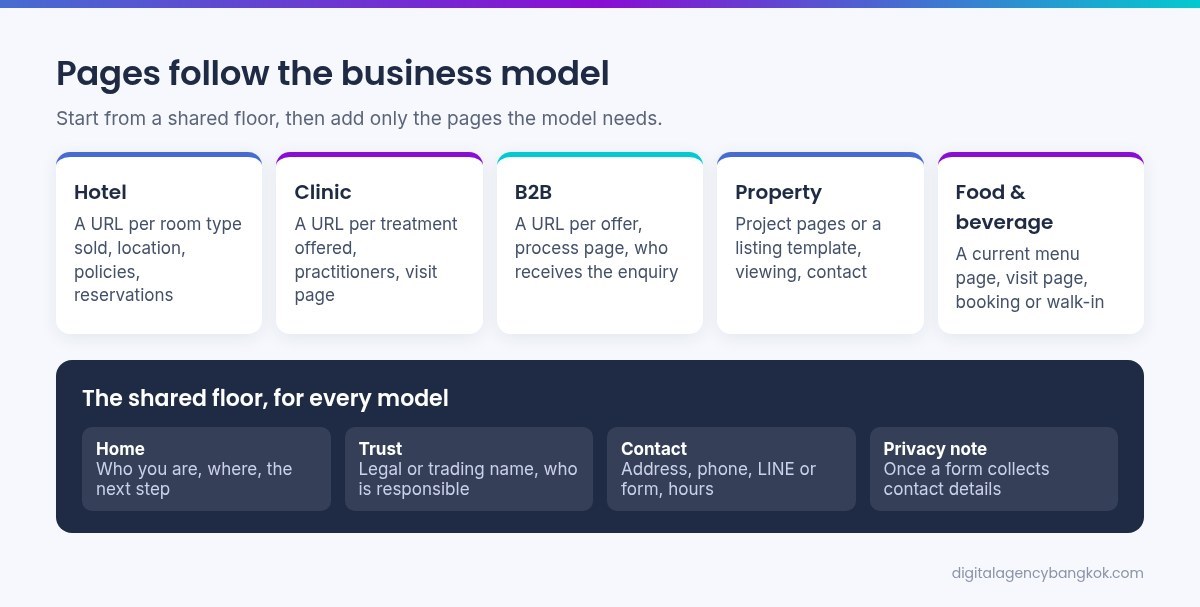
Every model still needs a floor. The floor is not a package, and it is not a finished site. A clinic that stops here has no treatment URL. A hotel that stops here has no room URL.
Usually needed on the floor
- Home: who you are, where you operate, the one next step you answer.
- Trust: the legal or trading name, and who is responsible.
- Contact: address or service area, phone, the LINE or form you reply to, and hours if hours change the decision.
- A privacy note once a form collects a name, a phone, or an email. This note is not legal advice.
Optional on almost every site
A blog, only if someone will keep it true. A team page, only if a named person is part of the decision. Careers, only if you hire in public. A second services page that repeats the home. A thank-you URL is a form utility, not a menu item.
Hotel
The pages follow the stay, not a brochure. Guests use the site before they arrive, and sometimes to ask what the booking channel did not answer.

Usually needed
Home names the property type, the area, and how to book or enquire. Do not fake a booking engine. Each room type you sell gets a URL, not each photo. Dining, a pool, or meetings gets a page only if it changes the stay or is sold alone. Location is the neighbourhood and how a taxi or the train meets the door. Check-in, children, pets, and cancellation sit on one policies page. Reservations is the next step. Keep an offer only while it is current.
Optional
Weddings, events, or a spa, only if you sell them. A destination guide, only if someone local maintains it. An amenity is a line on the room page. Do not add a page in place of occupancy. This guide has no such figure.
Clinic
The reader is deciding whether to come in, and what to expect. This is not a medical encyclopedia, and not a claim about outcomes.
Usually needed
Home says the specialty, the place, and who it is for. A treatment needs a URL when a patient would search that name and you offer it. A home list is not enough for that query. One page per treatment you can explain, not per symptom you do not treat. Practitioners are usually named, with credentials you can stand behind. Hours, booking, what to bring, and the door are one visit page. Do not write a fee here.
Optional
A health note only if a clinician reviews it. Equipment is a line. A results gallery is optional, and only without an invented result. Do not imply volume, a success rate, or a wait.
B2B
The reader often has to brief a colleague. The page is what they forward.
Usually needed
Home says who you sell to, the problem, and the next step, usually a conversation. Each offer a buyer would search or brief needs a URL. An industry page exists only when the work or the next step differs. A process page says what a project includes and what happens after the first call. Proof is a page only if you can describe the work without inventing a result. Contact names who receives the enquiry.
Optional
A library with no owner stays unpublished. Department, partner, career, and press pages are optional. A public price page only if the price is public and kept true. This article sets no price. No case page for a made-up result.
Property
A project site and an agency site are different models. One blended homepage is neither a project nor a way to find a listing.
A project site
Usually needed: what is sold and where; one place per unit type you discuss; location a buyer checks; progress, kept current or taken down; the register path; contact. Payment, if published, is process. Do not invent a unit count, a sold share, or a price. Legal lines belong where counsel puts them.
An agency site
Usually needed: the area and what you list; a listing template, so a live unit is that page type, not a blog post; area pages only where you can stay accurate; how a viewing works; contact. When the unit is gone, the URL stops claiming it. That is an editing rule, not a metric.
Optional
Market notes, only from sources you can name, with no invented statistics. No page for a building you do not list. No second URL for the same unit. Do not add a page to imply inventory size or a viewing-to-offer rate.
Food and beverage
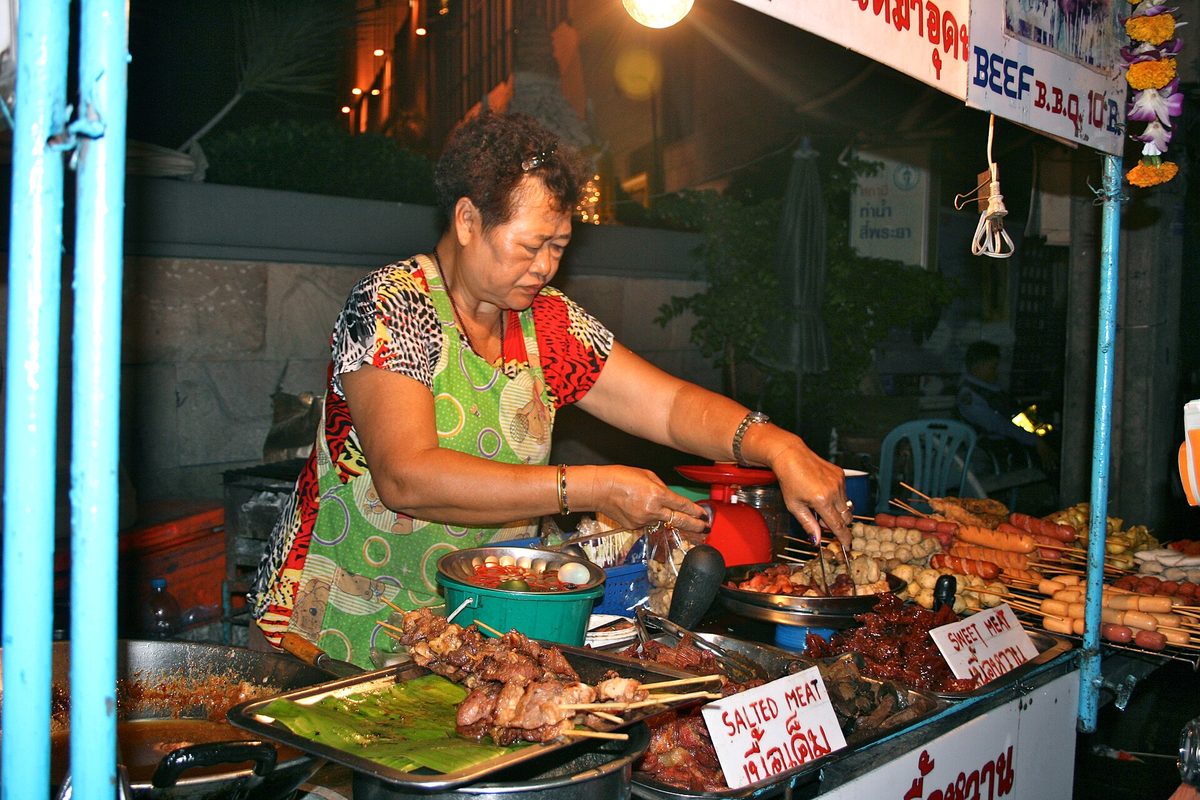
Guests check what you serve, whether it is current, and how to arrive or order. The rest waits.
Usually needed
Home says the food, the place, and dine-in, delivery, or both. The menu is its own page, current, in the guest’s language. One menu, or one page per outlet when menus differ. A PDF nobody updates is not that page. Hours and how to book or walk in are one visit page. Private dining only if you sell it and will answer.
Optional
A story page, a gallery that is not the menu, and a dish URL are optional unless that dish is sold alone. Franchise pages only if the offer is real. Do not invent covers or a ticket size to justify a page.
What to leave off
Leave off a page that exists to hit a number, an empty archive, and a second homepage called services. Leave off a translation you will not maintain, and a fact you cannot update: the menu, a name, a sold unit, an ended offer. Remove sample pages the theme shipped, on staging. If a live path changes, use the upgrade note. This page points to one service.
How to decide
- Name the model. Two models means two sets, not one homepage.
- If the homepage answers the question before the scroll, it stays a section.
- If someone searches it, or sends the URL, it is a page. One job, one next step.
- Split offers when the next step differs. Keep them together when the proof is the same.
- A language pair only where a second audience will use the page.
- No owner and no update path means do not publish it to fill the menu.
- Replace an old tree only through a safe WordPress upgrade, so old URLs redirect. If the new pages will be heavy on a phone, read the Core Web Vitals note first.
That order is the work. It sits beside web design. This page quotes no price and reports no client page count.
FAQ
Is there a correct number of pages for a Thai business website?
No. The model decides the set. A hotel, a clinic, a B2B firm, a project, an agency, and a food brand do not share a quota. This page does not treat a range as a measured result, and it prints no client page count.
Should every page exist in Thai and English?
Only if both audiences use it. A pair is the same job twice. Do not add an English URL nobody will maintain, and do not put both languages on one URL and call that two pages.
What is a page, and what should stay a section?
If the homepage answers it before the scroll, it is a section. If the query, the menu, or a salesperson needs a stable URL, it is a page. An amenity, a dish, and an album are usually sections. A room type, a treatment you offer, a live listing, and a current menu are usually pages.
Do more pages help search?
A page helps when it matches a real question and stays accurate. A thin extra URL does not. This note claims no traffic effect and no conversion effect. Slow new pages belong with the Core Web Vitals note. Moved URLs belong with the safe WordPress upgrade note. This page does not quote a fee.
Where is the price, and how is this different from a service page?
Not here. We do not set a fee, and we do not print a client page count. Web design is the service. This note names the model, keeps the pages that do a job, and marks the rest optional.