



Shopee, Lazada, or Your Own Website? The eCommerce Strategy Businesses Need





If you sell on Shopee or Lazada and someone tells you to “just build a website,” ask them which problem the website is supposed to solve.
Marketplaces already give you traffic, checkout, and a buyer who trusts the app. An owned store gives you margin, customer data, and a brand that does not disappear when the algorithm changes. Those are different products. Treating them as the same purchase is how Thai brands either over-invest early or stay trapped on 15–20% platform costs forever.
This is not “why websites are important” (we already have a short piece on that), and it is not “who should have ecommerce” (Which businesses should have their own e-commerce website?). It is the decision Thai sellers actually face in 2026: stay marketplace-only, add an owned store, or run both.
Short answer: stay on Shopee/Lazada while you are still validating products and volume. Add your own store when marketplace fees, ads, and discount programmes are eating the margin, when you need customer data you do not own today, or when brand and Google matter. Most serious Thai brands end up with both, not a religious either/or.
What each channel is for
Shopee / Lazada are rental shelves inside someone else’s mall. The mall brings the foot traffic. You pay for the shelf (commissions, transaction fees, optional free-shipping and voucher programmes) and you play by mall rules: ranking, chat SLAs, return policies, flash-sale calendars.
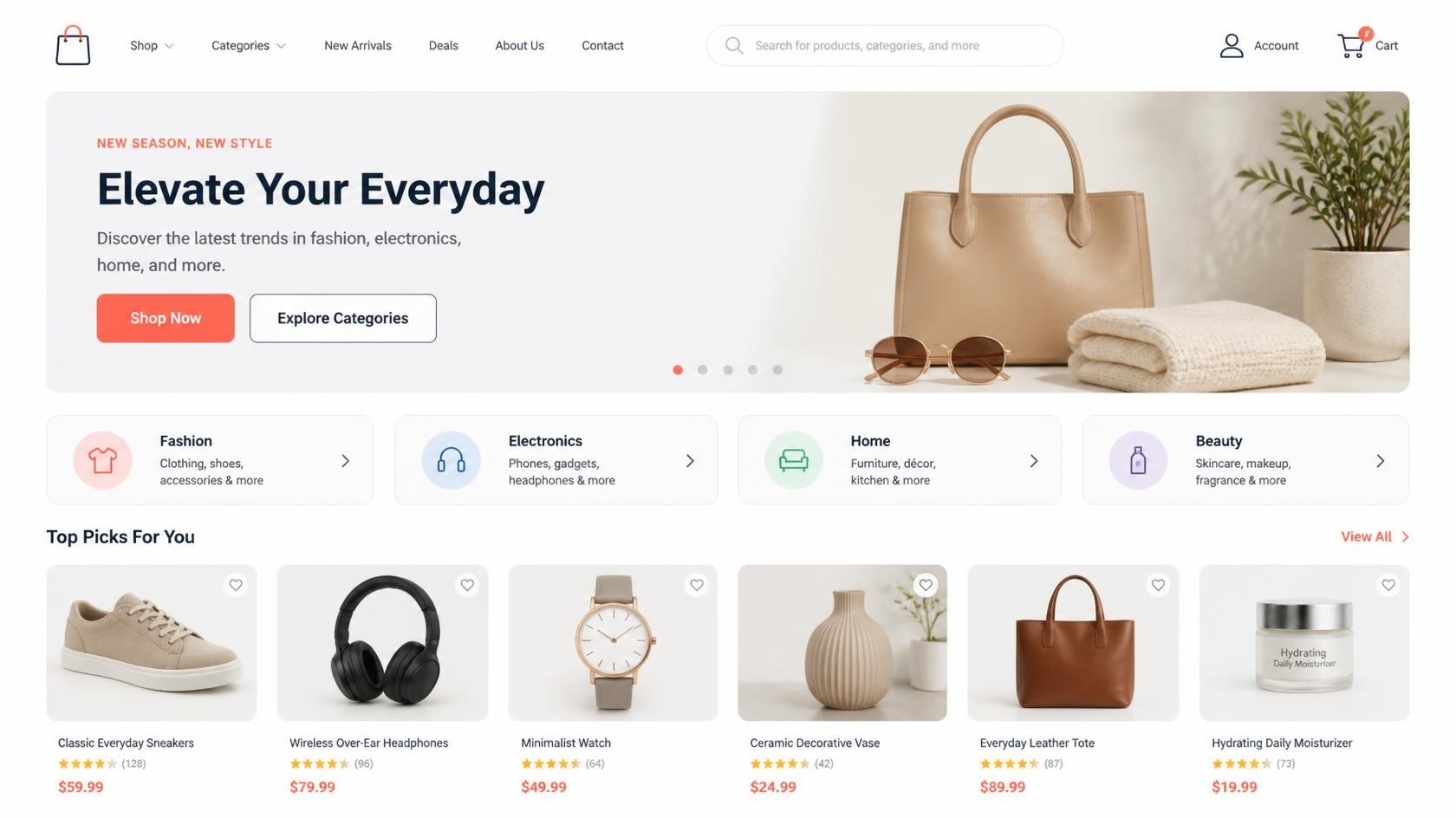
Your own ecommerce website is a shop you control. Checkout, brand, prices, membership, and SEO are yours. Nobody walks past your door unless you bring them with Google, ads, LINE, email, or social. Build cost in our published band is ฿39,500–฿150,000 for a proper Thai store (ecommerce website development, website cost in Thailand 2026). Platform choice (Shopify vs WooCommerce) is a separate article.
TikTok Shop is a third mall with its own fee stack. Same logic as Shopee/Lazada: great for discovery, expensive if it is your only checkout forever.
The fee conversation (without fake precision)
Marketplace fees change. Category, Mall vs non-Mall, free-shipping programmes, coins/vouchers, and ads all stack. Thai business press in 2026 has reported Shopee service fees climbing into the mid-to-high teens (with some categories reported near 19% including VAT) and Lazada marketplace service fees climbing by category (with some Mall categories reported up to 17.5% before VAT). Sellers who join free-shipping and campaign voucher programmes often describe all-in costs around 20% of selling price before they even buy ads.
Treat those as order-of-magnitude, not your invoice. Open Seller Centre today and read the live rate card for your category. Then add:
- payment / transaction fees
- free-shipping or campaign programme fees you “have to” join to stay visible
- Shopee Ads / Lazada Sponsored
- returns and reverse logistics
- staff time answering chat
An owned store is not free. You pay build + hosting/maintenance + payment gateway fees. You do not pay a mall a cut of every order. That is the math that starts to matter after you have real GMV, not before your first hundred orders.
When marketplace-only is the right call
Stay Shopee/Lazada-only (or mostly) if:
- you are still testing which SKUs sell
- most buyers discover you inside the app, not by brand name
- you cannot staff website updates, packing, and customer service for a second channel yet
- your margin survives the current fee + ads stack
- you need speed more than brand control
In that phase, money usually returns more on better listings, photos, chat speed, and ads than on a new website. If the store is a mess, fix the store. We manage that work under Shopee and Lazada maintenance.
When you should add your own store
Add an owned website when one or more of these are true:
- Fees are the business. If 15–20%+ of every order is already spoken for before ads, a channel with gateway fees only starts to look rational.
- You do not own the customer. Marketplace buyers are hard to email, hard to put on LINE OA properly, and hard to remarket on your terms. An owned checkout lets you collect consent and data you can actually use.
- Brand matters. Packaging, story, B2B price lists, membership, or a look that is not a Shopee template. Marketplaces are bad at this by design.
- Google or content is part of the plan. Ranking for commercial Thai keywords needs a real site. Marketplace SEO is mostly internal ranking inside the mall.
- You are tired of rule changes. One policy update can wipe a week of ads. Diversifying checkout is risk management, not fashion.
- Wholesale / export / custom checkout. Bulk pricing, deposits, or workflows that do not fit Seller Centre. That may be ecommerce or a custom web app.
Small brands can start on marketplaces and add a site later. That is fine. The trap is waiting until fees have trained your customers to only buy when there is a 50% voucher.
Why “both” is the adult answer
For most Thai brands past the hobby stage, the winning setup is:
- Marketplace = acquisition and impulse volume
- Owned store = higher-margin repeat buyers, brand, SEO, email/LINE, ads landing on a URL you control
Same catalogue, different job. Sync stock or you will oversell. Price carefully: undercutting yourself on Shopee while protecting margin on the website is normal; pretending the prices must always match is how finance fights marketing.
Do not shut Shopee the week the website launches. Traffic does not teleport. Run both until the website has its own demand (SEO, remarketing, LINE, content), then decide how hard to push each channel.
Cost side by side (honest, not a spreadsheet fantasy)
| Shopee / Lazada | Owned store (DAB published range) | |
|---|---|---|
| Getting started | Low setup; listings + ads | Build ฿39,500–฿150,000 depending on SKUs, payments, shipping |
| Per order | Commission + programmes + often ads (check Seller Centre; all-in often teens to ~20%+) | Payment gateway fee; no mall commission |
| Traffic | Platform brings buyers | You bring buyers (SEO, ads, social, LINE) |
| Customer data | Limited / platform-gated | Yours (if you collect it properly) |
| Brand / UX | Template mall | Your design, PromptPay, membership, content |
| Ongoing | Ads + ops + chat | Hosting, updates, security (annual fees) + optional SEO |
A ฿39,500 store that nobody visits is more expensive than a healthy Shopee shop. A six-figure GMV brand paying ~20% forever with no owned list is also expensive. The build invoice is only half the story.
A 20-minute decision
- What % of selling price do you keep after marketplace fees, programmes, and ads last month? If you do not know, open Seller Centre before you book a web meeting.
- Where do new customers find you? Inside the app only → marketplace first. Brand search / LINE / Google → website earns its keep.
- Do you need data and repeat purchase tools you control? Yes → own store.
- Can you operate two channels without overselling? No → fix ops or hire help before you launch a second checkout.
- Is this a brochure with a cart, or a real catalogue? Real catalogue → budget inside the ecommerce band, not a ฿14,900 brochure site.
Typical ecommerce timeline is still about 6–12 weeks once product data exists (duration guide). Shopify vs WooCommerce for the build is the previous decision post if you publish that first.
What to do next
- Marketplace store is messy: start with Shopee & Lazada store management.
- Ready for your own checkout: ecommerce website development or packages.
- Not sure which band you are in: 20 minutes, not a 40-page deck. Tell us monthly GMV, fee %, SKU count, and whether Thai + English matter.
Call 098-765-5243 or 098-765-5701, email [email protected], or send the quote form. Ask for marketplace help, an owned store, or both. Say which problem you are solving.
We only sell on LINE and Instagram. Do we need Shopee and a website?
Maybe neither on day one. If chat-close works, keep it. Add a marketplace for reach or a website when you need proper checkout, stock, and SEO. Chaos in the chat is not a channel strategy.