


More Google Ads Campaigns Don’t Always Mean More Customers





More Google Ads Campaigns Don’t Always Mean More Customers
There's a question that comes up in almost every Google Ads strategy conversation, usually somewhere around the point where a business has had some initial success and is trying to figure out what to do next: "How many campaigns should we actually have?" It sounds like it should have a clean numerical answer — three, five, ten — but the honest answer is that campaign count was never really the right variable to optimize for in the first place. The number of campaigns that makes sense for a given account is a byproduct of structure, not a target to hit on its own.
That said, "it depends" isn't a satisfying or useful answer either, and there are genuinely well-established principles that determine what a sensible campaign count looks like for a given business, a given budget, and a given set of goals. This article walks through how Google Ads campaign structure actually works, what determines whether a business needs two campaigns or twenty, and how to think about campaign count as a business scales.
Why Campaign Count Isn't the Real Question
The Question Behind the Question
Before getting into numbers, it's worth understanding why this question gets asked so often, and why the instinct behind it is usually slightly off target. Businesses tend to ask "how many campaigns" because they're really asking a deeper question: "Is my account structured well enough to perform efficiently?" Campaign count is just the most visible, easiest-to-count proxy for that deeper structural question — but it's an imperfect one, because the right structure depends entirely on how a business's offerings, goals, and budget are organized, not on any universal ideal number.
Why the Right Number Varies So Widely
A business selling one product to one audience with one clear goal might do extremely well with a single, well-built campaign. A business with ten distinct product categories, multiple geographic markets, and different campaign objectives (driving sales versus building awareness versus generating leads) might reasonably need a dozen or more campaigns to keep those different goals and audiences from working against each other inside a shared, undifferentiated structure.
The real question isn't "what's the right number" — it's "does each of my campaigns represent a genuinely distinct goal, audience, or budget priority that deserves its own dedicated structure?" Once that question is answered honestly, the right campaign count tends to fall out naturally.
The Core Principle: One Campaign, One Clear Objective
How Google's Bidding Algorithms Actually Work
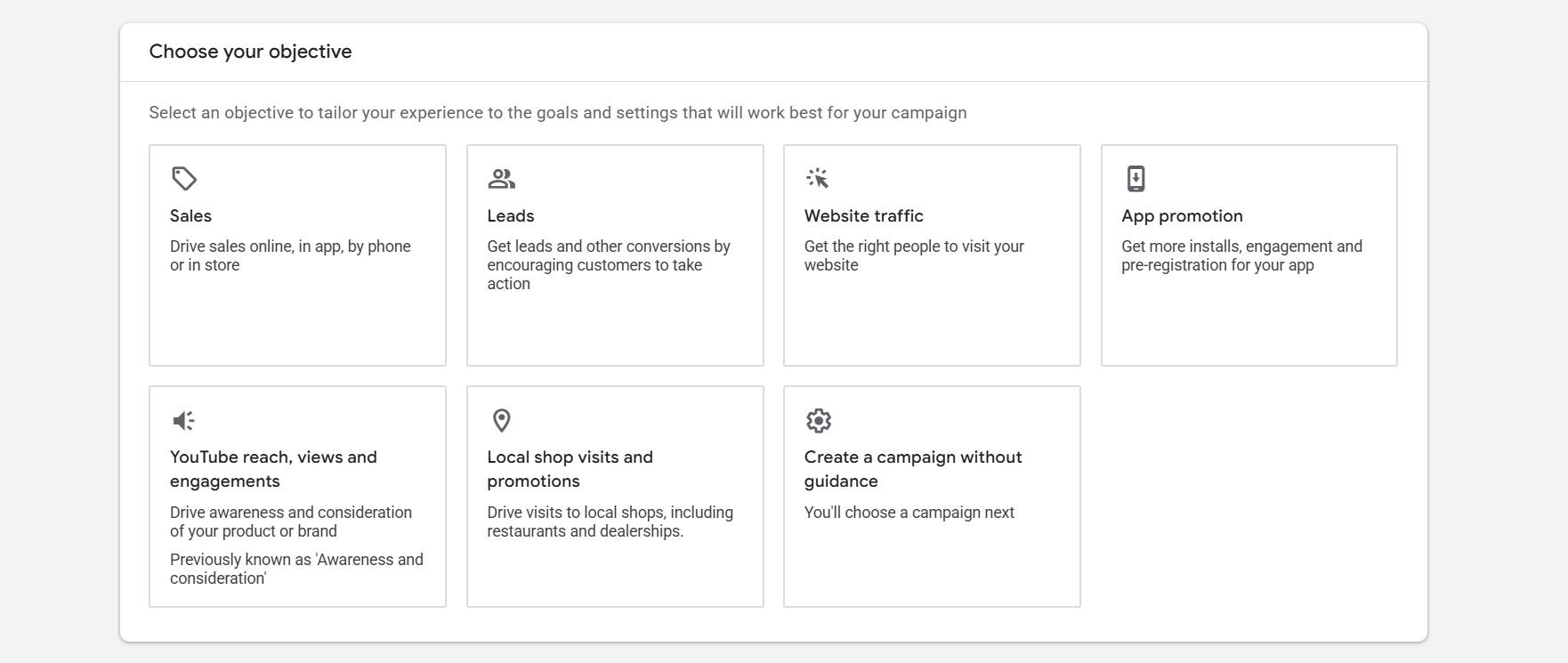
Google Ads campaigns are built around a single campaign-level goal and budget. This isn't an arbitrary platform limitation — it reflects how the underlying bidding algorithms actually work. Google's automated bidding systems optimize toward whatever goal a campaign is set up to pursue, using the budget allocated to that specific campaign. When a single campaign tries to serve two meaningfully different goals at once — say, driving both immediate sales and broad brand awareness — the bidding algorithm doesn't know which goal to prioritize moment to moment, and performance for both goals tends to suffer as a result.
A Case Where Separation Is Clearly Right
A software company launching both a lead-generation campaign aimed at driving demo requests and a completely separate brand-awareness campaign aimed at building general recognition among a broader audience is a case where two distinct campaigns is clearly the right call, even though both technically promote the same underlying product — because the metrics that define success (form submissions versus impressions and reach) are fundamentally different, and the bidding strategy each campaign needs is different too.
This is the actual principle underlying campaign count: the number of campaigns should equal the number of genuinely distinct combinations of goal, audience, and budget priority a business is pursuing — not more, and not fewer.
When One Campaign Is Genuinely Enough
Smaller, Focused Businesses Don't Need to Fragment
It's worth stating plainly, since it's often underappreciated: plenty of businesses are well served by a single, focused, well-optimized campaign, particularly when just getting started or operating with a narrow, focused offering. A local plumbing business offering a handful of core services in one city, primarily focused on driving phone calls and quote requests, doesn't need to fragment its modest budget across five separate campaigns just because that feels more "advanced." A single well-structured campaign — organized internally through tightly themed ad groups for each service type — often performs better than the same budget spread thin across multiple campaigns competing against each other for the same limited daily spend.
The Hidden Cost of Fragmentation
This matters because campaign fragmentation carries a real cost that's easy to overlook: Google's bidding algorithms need a meaningful volume of conversion data to optimize effectively, and splitting a modest budget across too many campaigns starves each one of the data volume needed for the algorithm to learn and improve efficiently. A business running 1000 THB a day total is generally far better served by one focused campaign than by five campaigns each running 200 THB a day, since none of those five would likely generate enough conversion volume for automated bidding to work well.
When Splitting Into Multiple Campaigns Makes Sense
There are a handful of clear, recurring situations where separating into multiple campaigns genuinely improves performance rather than just adding administrative complexity:
- Distinctly different goals. If part of the strategy is driving direct conversions and another part is building broader awareness or remarketing audiences, these deserve separate campaigns with separate bidding strategies aligned to each specific goal.
- Products or service lines with different economics. A home renovation company offering both large kitchen remodels (high value, longer sales cycle, smaller search volume) and smaller handyman repair services (lower value, quicker decision, higher search volume) benefits from separating these into distinct campaigns, since lumping them together under one shared budget and bidding strategy means the algorithm has to reconcile two very different conversion values and decision timelines within a single optimization target — something it generally handles poorly compared to two campaigns each optimized around their own distinct economics.
- Different geographic markets. A business operating in both a highly competitive major metro area and a smaller, less competitive regional market often benefits from separate campaigns for each, since cost-per-click, competition, and budget efficiency can differ substantially between the two — a shared campaign risks either overspending in the smaller market or underfunding the more competitive one.
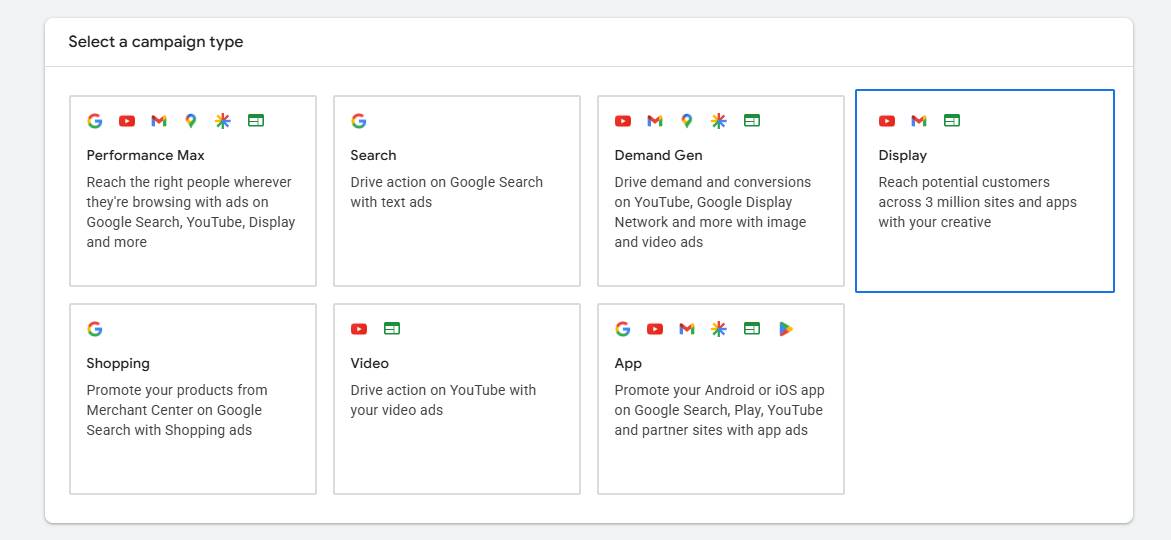
- Distinct campaign types serving different funnel stages. A well-rounded account often separates Search campaigns (capturing active, high-intent searchers), Display or Video campaigns (building broader awareness among people not actively searching yet), and Remarketing campaigns (re-engaging past visitors) — since these serve fundamentally different roles in the customer journey and shouldn't share a single undifferentiated budget or bidding strategy.
- Meaningfully different budget priorities. If a business wants to guarantee a certain minimum daily spend toward its highest-priority, best-converting product line regardless of how other campaigns perform, separating that priority into its own campaign with a protected budget prevents lower-priority campaigns from inadvertently consuming a budget that was meant to be reserved for the top priority.
A Practical Way to Think Through Structure
The Exercise
A useful exercise for determining the right campaign count for a specific business:
- List out every distinct product, service line, or offering.
- List out every distinct target audience or geographic market.
- List out every distinct campaign goal (direct conversions, lead generation, awareness, remarketing) the business genuinely needs to pursue.
- Look for natural groupings — items that share a similar goal, similar audience, and similar budget priority can usually be organized within the same campaign, using separate ad groups to keep them appropriately segmented at a more granular level.
- Flag items that differ meaningfully along any of those three dimensions as candidates for their own dedicated campaign.
Walking Through a Dental Practice
A dental practice offering general checkups, cosmetic procedures, and emergency same-day appointments is a useful case to walk through this way:
- General checkups and standard dental care share a similar goal (booking an appointment) and a similar audience (local residents doing routine research), so these can often live comfortably within one campaign, organized into separate ad groups.
- Cosmetic procedures typically involve a meaningfully different audience (people specifically researching a discretionary, often higher-value procedure, sometimes willing to travel further) and a different average conversion value, making a separate campaign a reasonable choice so its bidding strategy isn't diluted by the very different economics of routine checkups.
- Emergency same-day appointments represent an entirely distinct urgency-driven search behavior and audience state, and typically deserve their own dedicated campaign with bidding and ad copy specifically built around that immediate need, rather than being folded into general dental marketing.
That single practical example — three natural categories emerging from one modest business — illustrates the underlying principle well: the "right" campaign count wasn't decided in advance as a target number, it emerged from genuinely distinct goals, audiences, and economics within that specific business.
How Budget Size Should Influence Campaign Count
Automated Bidding Needs Data Volume to Work
Available budget plays a significant, sometimes underappreciated role in determining a sensible campaign count, independent of how many product lines or audience segments a business could theoretically justify separating. Google's automated bidding strategies — particularly conversion-focused strategies like Target CPA or Target ROAS — generally need a reasonable volume of weekly conversions per campaign to optimize effectively, often cited as somewhere in the range of at least a handful of conversions per week per campaign as a rough baseline for reliable automated bidding performance.
Consolidate Small, Split as You Grow
A business with a smaller overall budget is often better served by consolidating into fewer, better-funded campaigns, even if a more granular structure could theoretically be justified by product or audience differences — because starving several thin campaigns of adequate conversion volume tends to produce worse overall results than concentrating that same budget into fewer campaigns with enough data for the bidding algorithm to actually learn from. As a business's budget grows over time, splitting into more granular, specialized campaigns becomes increasingly viable, since each individual campaign can then be funded adequately enough to still generate sufficient conversion data despite the more granular structure.
This is a genuinely common pattern in growing accounts: an ecommerce store launching with a single, broad Search campaign covering its entire catalog under a modest starting budget, then gradually splitting into category-specific or even individual high-value product campaigns as overall ad spend and conversion volume grow large enough to support that finer segmentation without diluting any individual campaign's data below an efficient threshold.
Structure Within Campaigns Matters as Much as Campaign Count
Ad Groups Carry More Weight Than People Assume
It's worth emphasizing that campaign count is only one layer of account structure — ad groups within a campaign carry much of the granular targeting and messaging precision that people sometimes assume requires a whole separate campaign. A well-structured campaign with tightly themed ad groups, each built around closely related keywords and matching ad copy, can often achieve the specificity a business needs without necessarily requiring a completely separate campaign for every minor variation in product or audience.
A Landscaping Company Example
A landscaping company offering lawn care, tree trimming, and irrigation installation, for instance, could reasonably run all three under a single "Residential Landscaping Services" campaign, provided each service gets its own dedicated ad group with tightly matched keywords and ad copy specific to that service — achieving meaningful message and targeting precision at the ad group level without needing to fragment the account into three entirely separate campaigns, unless those services genuinely diverged in target audience, budget priority, or campaign goal in a way that warranted full separation.
Reassessing Structure as the Business Evolves
Structure Should Grow With the Business
The right campaign count for a business isn't a fixed, one-time decision — it should be revisited periodically as the business, its offerings, and its advertising budget evolve. A business that starts with one focused campaign because that was appropriate for its early, modest budget may genuinely need to split into several more specialized campaigns a year or two later, once its budget, product range, or geographic footprint has grown enough to justify — and adequately fund — a more granular structure.
Knowing When to Consolidate
Conversely, a business that has accumulated a sprawling, overly fragmented account structure over time, often through incremental additions made without a broader strategic review, sometimes benefits significantly from consolidating underperforming, thinly-funded campaigns back into fewer, better-resourced ones.