


Hotel Website or App : Which Delivers a Better Guest Experience?





Hotel Website or App : Which Delivers a Better Guest Experience?
A boutique hotel owner once asked a developer a deceptively simple question: "Should we build an app, or is our website enough?" The honest answer wasn't a straightforward yes or no — it was another question: "What are you actually trying to get your guests to do, and when?" That reframing matters, because the hotel website versus hotel app decision isn't really a contest between two competing technologies. It's a question about guest behavior at different stages of their relationship with a property, and each format is genuinely better suited to certain stages than others.
Hospitality is an industry where this decision carries real weight. Unlike a retail purchase that happens once, a hotel relationship unfolds across a much longer arc — discovery, research, booking, pre-arrival anticipation, the stay itself, and post-stay follow-up. A website and an app don't compete for the same moments in that arc; they tend to dominate different ones. Understanding where each format wins, and where each one falls short, is what separates a hospitality business making a smart digital investment from one throwing budget at a trend.
The Short Answer
A hotel website is the property's public-facing front door — accessible to anyone with a browser, no download required, built primarily to attract new guests, showcase the property, and convert browsing visitors into bookings. It's the tool for the discovery and research phase, and it needs to work for someone who has never heard of the hotel before.
A hotel app is a dedicated, downloadable tool built primarily for guests who already have a relationship with the property — whether that's someone actively staying there, a loyalty member, or a returning guest. It's built for depth of engagement rather than broad discovery, offering features like mobile key access, in-app service requests, and personalized loyalty benefits that only make sense once someone has already chosen to engage more deeply with a specific brand.
Put simply: the website's job is to win the guest. The app's job is to keep and better serve the guest who's already won. Confusing which job belongs to which tool is where a lot of hospitality digital budgets go to waste.
Why This Distinction Matters More in Hospitality Than in Most Industries
Hospitality has a few characteristics that make the website-versus-app decision more consequential than it might be for other kinds of businesses.
Discovery almost always starts outside any app a hotel controls. Guests research hotels through Google search, review sites, OTAs (online travel agencies) like Booking.com or Expedia, and social media — not by browsing an app store looking for a specific property's app. This means a hotel's website, not its app, is doing the vast majority of the work in that critical first-impression, comparison-shopping phase.
Downloading an app is a meaningful commitment most prospective guests won't make. Asking someone who hasn't booked yet — and may be comparing five other properties simultaneously — to download an app before they've even decided to stay is a significant friction point. Very few travelers will do this during the research phase, no matter how well-designed the app is.
Once someone is a guest, though, the calculation flips. A guest who has already booked, and especially one who is physically on property, has strong, immediate reasons to want quick access to features an app can provide well — mobile check-in, a digital room key, one-tap service requests — because those features solve real friction happening in that exact moment.
This is why hospitality businesses that get this decision right tend to build a genuinely strong website first, and treat an app as a second, later investment aimed specifically at deepening the relationship with guests who are already booked, staying, or loyal — not as a replacement for the website's discovery-and-conversion role
What a Hotel Website Needs to Do Well
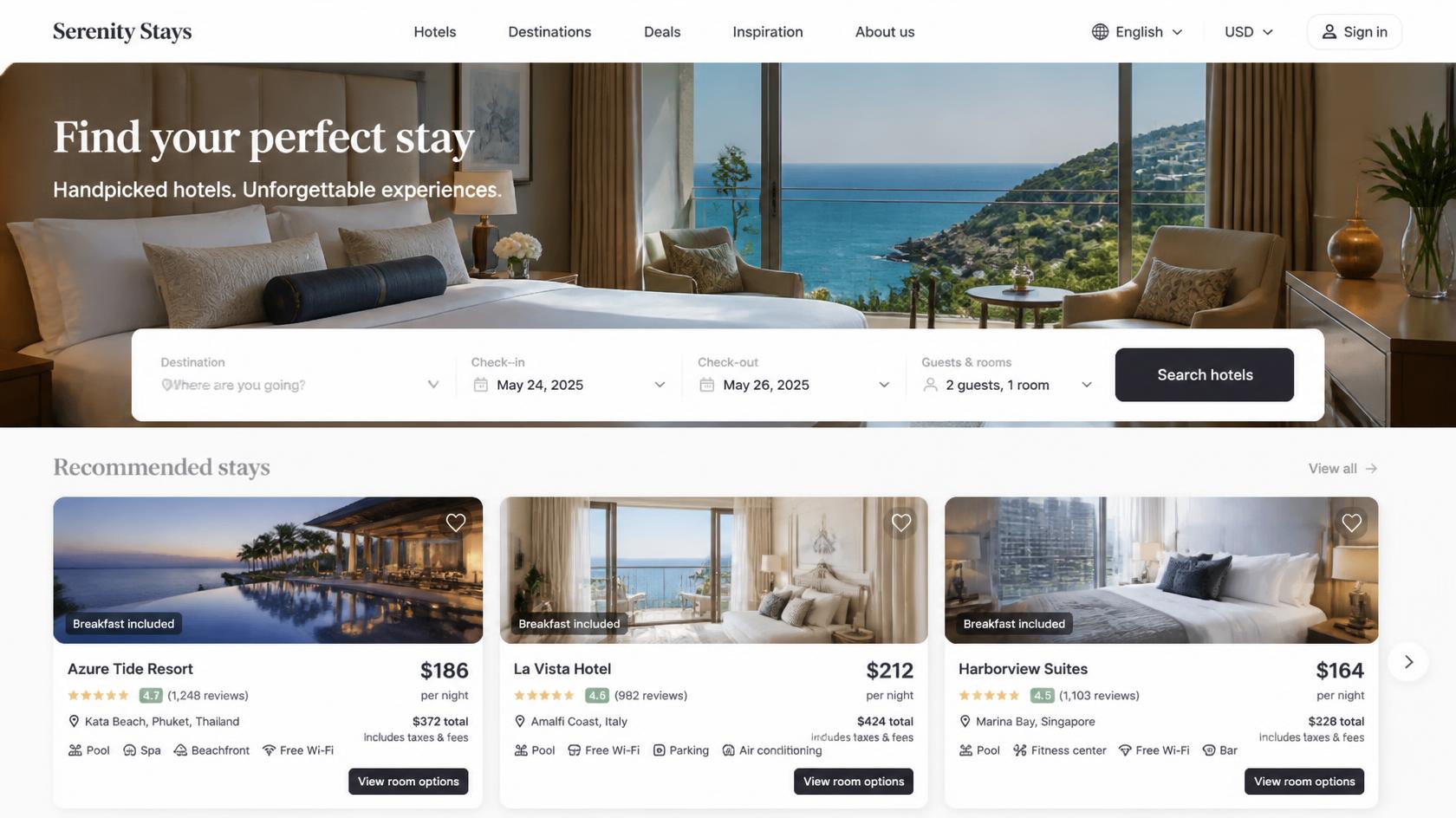
Attract and Convert Unfamiliar Visitors
A hotel website has to work instantly for someone who has never heard of the property before — clear, compelling photography, an obvious value proposition, and a frictionless path to checking availability and booking, all without requiring any download or account creation.
Rank in Search and Compete on OTAs' Turf
Strong technical SEO, clean structured data, and well-optimized location and amenity pages all matter significantly here, since a large share of hotel discovery happens through search engines, and a well-optimized website can compete directly with — and sometimes outrank — third-party OTA listings for the same searches, which matters because direct bookings save the property the commission fees OTAs charge.
Present Real-Time Availability and Pricing
A functioning hotel website needs a booking engine — either built in or integrated through a property management system (PMS) — that shows accurate, live room availability and pricing, ideally allowing guests to complete a direct booking without ever leaving the site.
Showcase the Property Comprehensively
Unlike an app, which a guest opens repeatedly for specific quick tasks, a website is often browsed more slowly during the research phase — meaning it needs to do more storytelling: photo galleries, room-type comparisons, amenity details, nearby attractions, and social proof through reviews and testimonials.
Work Flawlessly on Mobile Without Requiring a Download
A large share of hotel research and even booking now happens on mobile browsers, which means a hotel website needs excellent mobile responsiveness on its own merits — it can't rely on "well, they can just use the app instead" as a fallback, since a first-time visitor is unlikely to download anything before deciding whether to book
What a Hotel App Needs to Do Well
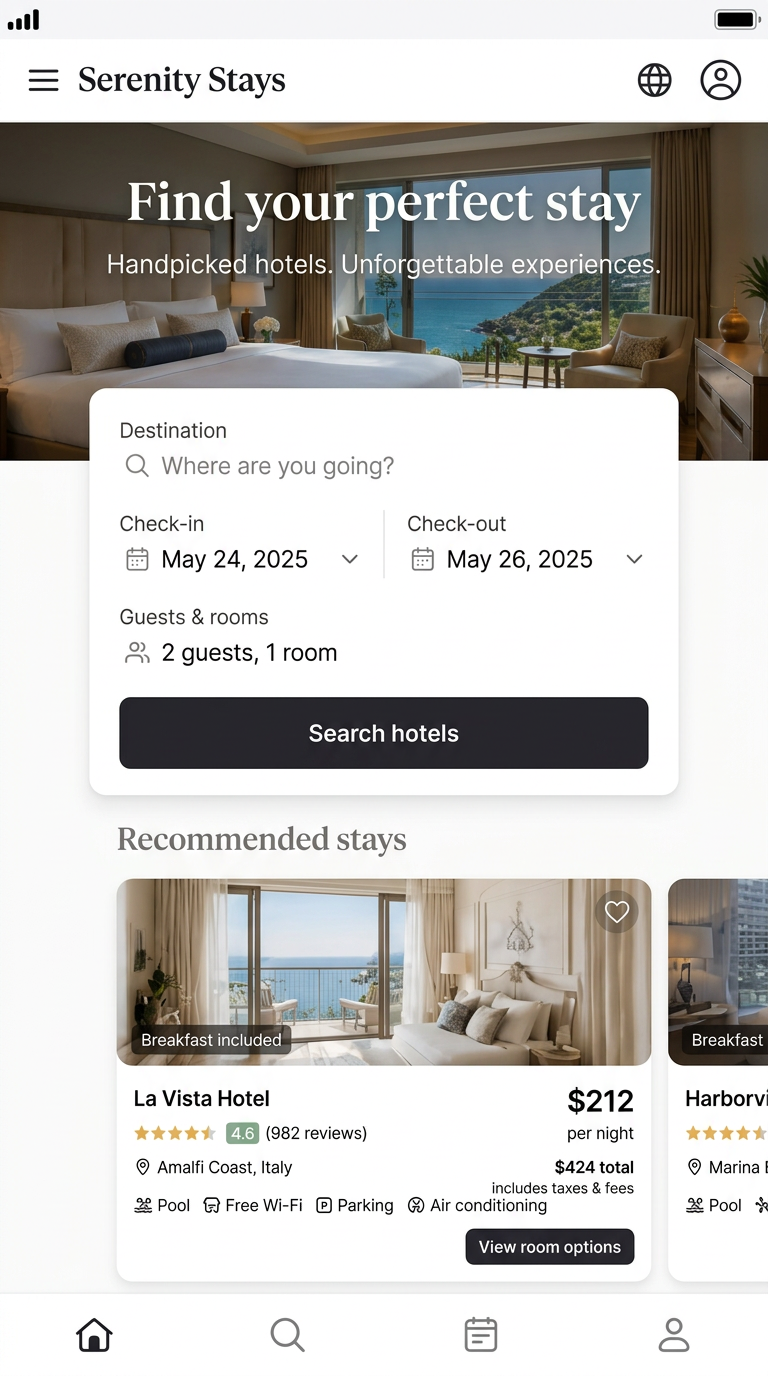
Streamline the On-Property Experience
This is where apps genuinely shine: mobile check-in and check-out, digital room keys that let guests bypass the front desk entirely, in-app requests for housekeeping or room service, and real-time messaging with hotel staff — all features that solve immediate friction during an actual stay, in ways a website simply isn't positioned to.
Deepen Loyalty Program Engagement
Apps are a strong fit for loyalty programs — tracking points, displaying member-specific offers, sending personalized push notifications about upcoming stays or relevant promotions, and making it easy for repeat guests to rebook quickly using saved preferences and payment information.
Enable Personalization at a Level Websites Struggle With
Because an app is used by someone with an established account and stay history, it can meaningfully personalize the experience — remembering room preferences, surfacing relevant local recommendations based on past visits, or tailoring offers based on booking patterns — in a way that's much harder to do for an anonymous website visitor who hasn't logged in or been recognized before.
Provide Fast, Frictionless Access During a Stay
A returning guest already staying at a property benefits from the speed of a native app — quicker load times, offline access to certain information, and the convenience of not having to navigate to a website URL every time they want to make a request. This is a genuine advantage during the stay itself, even if it doesn't matter much before the guest ever arrives.
Push Notifications for Timely, Relevant Communication
Apps can send push notifications — a pre-arrival reminder, a note about early check-in availability, a post-checkout request for a review — in a way that's more immediate and less likely to be ignored than an email, though this needs to be used carefully, since overly frequent or irrelevant notifications quickly lead guests to disable them entirely or delete the app altogether.
Where the Two Overlap — And Where That Overlap Creates Confusion
Both a website and an app can technically handle bookings, both can display property information, and both can support a loyalty program to some degree. This overlap is exactly where a lot of hospitality businesses get confused about which one to prioritize, or end up trying to build both to do everything, which usually means both end up mediocre rather than one being genuinely excellent.
The more useful way to resolve that overlap is thinking in terms of the guest's actual state at the moment they'd use each tool. Someone comparing hotels for an upcoming trip is almost certainly on a website, likely arriving from a search engine or an OTA listing, and has made no commitment yet. Someone standing in the hotel lobby wanting to skip the front desk queue, or a loyalty member checking their point balance from home, is in a fundamentally different position — already committed, already invested, already more willing to have downloaded a dedicated app.
A Side-by-Side Comparison
| Factor | Hotel Website | Hotel App |
| Primary audience | New and prospective guests | Existing, returning, or loyalty guests |
| Access friction | None — instant browser access | Requires download and often account creation |
| Best stage of guest journey | Discovery, research, booking | Pre-arrival, on-property stay, post-stay loyalty |
| SEO and discoverability | Central — competes directly in search | Not discoverable through search at all |
| Personalization depth | Limited for anonymous visitors | Strong, based on account and stay history |
| On-property utility | Limited (mostly informational) | High (mobile key, requests, messaging) |
| Cost to build and maintain | Moderate | Generally higher, ongoing app store maintenance required |
| Update and compliance overhead | Lower — direct control over a website | Higher — app store review processes, OS compatibility |
Which One Is Actually "Better"?
Framed as a straightforward either-or question, this is close to the wrong question — but if forced to choose a starting priority, the website wins for the overwhelming majority of hospitality businesses, and it isn't particularly close. Almost every guest a hotel will ever have interacts with the website first, whether or not they ever interact with an app at all. A weak website with a strong app means most prospective guests bounce off a poor first impression before they ever get the chance to experience the app's advantages. A strong website with no app at all can still convert bookings effectively, deliver a good pre-arrival experience through email, and operate a functioning loyalty program through the website itself.
An app becomes genuinely valuable once a property has an established base of repeat guests, a serious loyalty program worth deepening, and on-property operational needs — mobile key access, streamlined service requests — that a website structurally cannot deliver. Larger hotel groups and chains, where guests are likely to stay across multiple properties and build an ongoing relationship with the brand, tend to get more value from an app investment than a single independent boutique property with a smaller, less frequently returning guest base.
Examples
A 20-room independent boutique hotel invested heavily in a beautifully designed, fast-loading, SEO-optimized website with a strong direct booking engine, and consciously decided against building an app, reasoning correctly that most of their guests were first-time visitors discovering the property through search and Instagram, not repeat guests who would benefit from a dedicated loyalty app. That decision let them concentrate their limited digital budget on the tool actually driving the overwhelming majority of their bookings.
A mid-sized hotel group with eight properties across a region built a strong, direct-booking-focused website first, and only invested in a dedicated app roughly eighteen months later, once they had built a large enough loyalty membership base to justify it. The app's mobile key and service-request features measurably improved guest satisfaction scores during stays, and its loyalty features helped increase repeat direct bookings — but critically, the group didn't attempt to build the app until the website and loyalty program had already proven there was a real base of engaged, returning guests who would actually use it.
A large international hotel chain, by contrast, benefits enormously from its app precisely because of scale — millions of loyalty members who stay across dozens of properties worldwide make mobile key access, cross-property loyalty tracking, and personalized recommendations genuinely valuable at a level a small independent property's guest base simply couldn't generate enough usage to justify.
How to Decide What Your Property Actually Needs
Start with an honest look at your current guest base: what share of bookings come from first-time versus returning guests, how strong is your existing loyalty program, and what specific on-property friction points (long check-in lines, slow service request handling) genuinely affect guest satisfaction today. A property with mostly first-time, one-off guests and no significant loyalty program should prioritize a strong, conversion-focused website well before considering an app. A property with a substantial base of repeat guests, an active loyalty program, and clear on-property operational pain points that mobile key access or in-app service requests would genuinely solve has a much stronger case for app investment — but even then, typically as a second investment layered on top of an already strong website, not as a replacement for one.