


9 SEO Opportunities Beyond Your Website





9 SEO Opportunities Beyond Your Website
When most business owners hear "SEO," they picture one thing: tweaking their website so it ranks on Google. That is an important part, but it is only part of the story.
Today, customers do not search in one place. They check Google Maps for a nearby shop, watch YouTube reviews, scroll TikTok for ideas, read Facebook comments, compare ratings, and ask AI tools for recommendations. By the time they reach your website, if they ever do, they have often already formed an opinion about you.
The lesson: SEO is not only about your website. It is about being easy to find, easy to trust, and consistent everywhere your customers look. In this guide, we explain where else SEO matters and how each place helps your business.
What Does "SEO Everywhere" Really Mean?
Search engine optimization is the practice of helping people find you when they search. Customers search on many platforms, not just Google's main results page. So modern SEO means making sure your business is visible, accurate, and credible across all of those touchpoints, not only on your own domain.
Think of your website as your home base, and everything else as the roads leading to it.
SEO Beyond the Website: Comparison Table
Where | What to Optimize | How It Helps Your Business |
Your website | Page titles, content, speed, mobile design, structure | Your main hub: converts visitors into leads and sales |
Google Business Profile and Maps | Accurate name, address, phone, hours, categories, photos, services | Shows up in local searches and "near me" results, drives calls and visits |
Online reviews | Request genuine reviews, reply to every review | Builds trust and influences both customers and local visibility |
YouTube and video | Keyword-rich titles, descriptions, thumbnails, helpful content | Reaches people who prefer watching, and videos can appear in Google results |
Social media profiles | Clear bio, consistent brand name, keywords, link to website | Helps people verify you, and profiles often rank for your brand name |
Social content (TikTok, Instagram, Facebook, LinkedIn) | Searchable captions, topics, hashtags, helpful posts | Builds discovery and awareness, as many people now search inside social apps |
Backlinks and mentions | Earn links from relevant sites, news, partners, directories | Signals trust and authority to search engines |
Directories and listings | Consistent business details on trusted local and industry directories | Improves credibility and local consistency |
Marketplaces and apps | Product titles, descriptions, images, ratings (Shopee, Lazada, app stores) | Captures shoppers searching inside those platforms |
AI and answer engines | Clear, factual, well-structured content and strong brand presence | Increases the chance of being cited or recommended in AI-generated answers |
9 Places Where SEO Matters (Beyond Your Website)
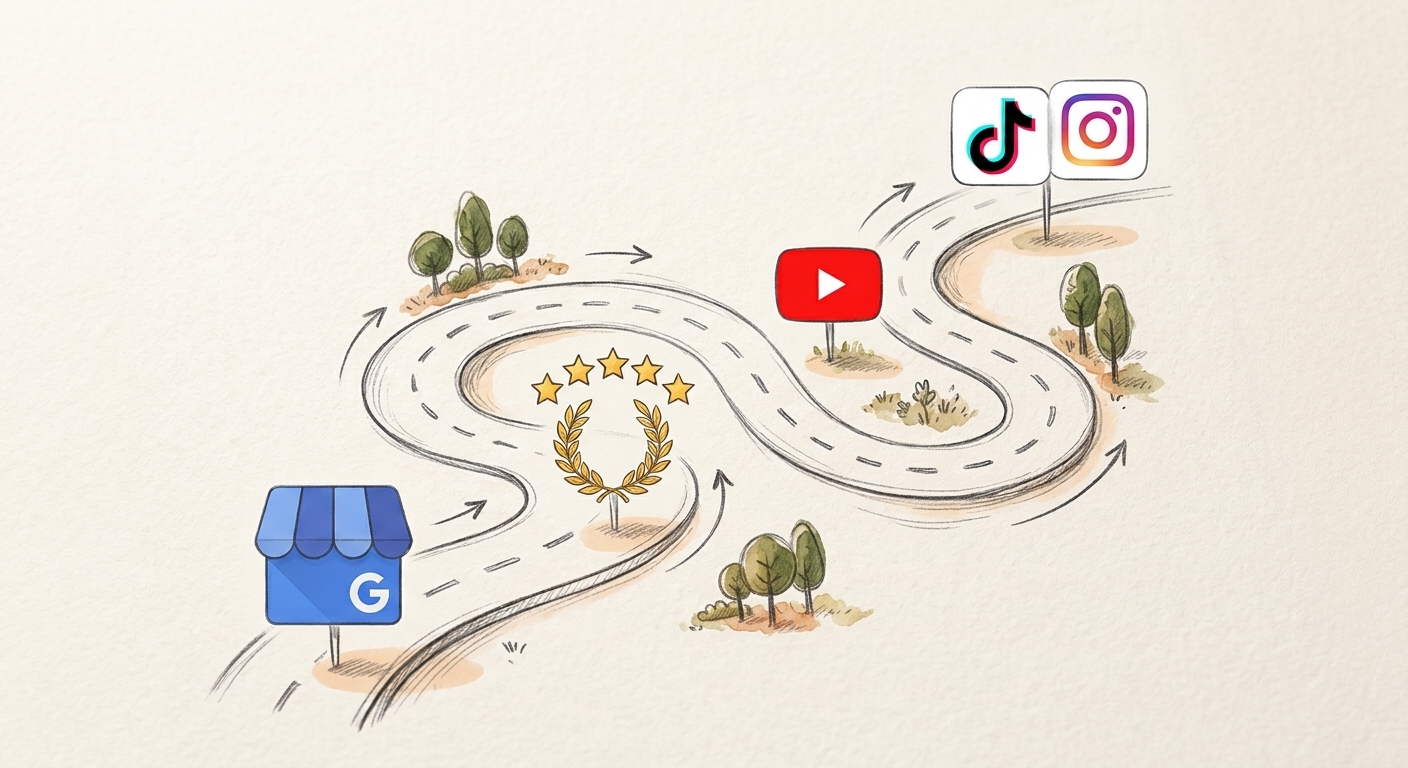
1. Google Business Profile and Google Maps
For any business with customers in a specific area, this is often your most valuable free asset. Keep your information accurate, choose the right categories, add real photos, list your services, and post updates. When someone in Bangkok searches "dentist near me," this is what they see first.
2. Customer Reviews
People trust other customers. A steady flow of genuine reviews, with thoughtful replies, builds trust and can support your local visibility. Never buy fake reviews, as they violate platform rules and damage credibility.
3. YouTube and Video Content
YouTube is one of the most used search platforms in the world, and video results can also appear in regular Google searches. Helpful how-to videos, product demos, and explainers can bring in people who would never read a long article.
4. Social Media Profiles and Content
Social media activity is not a direct ranking boost in the way many people assume, but it still matters. Your profiles can show up when people search your brand, and your content helps people discover you inside the apps themselves. Many younger customers search TikTok or Instagram before they search Google.
5. Backlinks and Brand Mentions
When respected websites link to or mention your business, search engines treat it as a sign of trust. You can earn these through quality content, partnerships, press coverage, guest articles, and industry involvement. Quality matters far more than quantity.
6. Business Directories and Listings
Consistent details across trusted directories (same name, address, and phone number everywhere) help customers and search engines confirm you are legitimate. Inconsistent or outdated listings create confusion and lost enquiries.
7. Marketplaces and App Stores
If you sell on Shopee, Lazada, or through a mobile app, you are competing in a search system of its own. Clear product titles, good photos, accurate descriptions, and strong ratings all affect how often you are found.
8. Images, Voice, and Visual Search
People increasingly search with photos and spoken questions. Descriptive image file names, alt text, and clear conversational answers on your pages make you easier to discover this way.
9. AI Search and Answer Engines
More people ask AI tools for recommendations. These tools draw on information found across the web, so clear, accurate content on your site plus a consistent presence elsewhere gives you a better chance of being mentioned. No one can guarantee placement, but strong fundamentals help.
Why a Consistent Presence Matters
The real power comes from the combination. When your website, Google Business Profile, reviews, social accounts, and listings all tell the same story, you create three things search engines and customers both look for:
- Visibility: you appear in more places.
- Consistency: your name, services, and details match everywhere.
- Credibility: others vouch for you through reviews, links, and mentions.
A Simple Action Plan
- Audit your presence. Search your business name and your main services. What shows up, and is it accurate?
- Claim and complete your Google Business Profile.
- Collect reviews by asking happy customers politely and replying to every review.
- Make your details consistent across your website, social profiles, and directories.
- Create helpful content in the formats your customers prefer: articles, videos, short clips.
- Earn quality mentions from partners, suppliers, local media, and industry sites.
- Track what works with Google Search Console, Google Analytics, and platform insights.
Want to Be Found Everywhere Your Customers Look?
At Digital Agency Bangkok, we look at the whole picture: website SEO, local SEO, content, and brand visibility across platforms. Contact us for a free online presence check and see where you stand today.