


Homepage vs. Landing Page: Key Differences Every Business Should Know

Homepage vs. Landing Page: Key Differences Every Business Should Know
If you've ever launched a paid ad campaign, sent an email blast, or run an SEO push and pointed all that traffic straight to your homepage, there's a good chance you left conversions on the table without realizing why. It's one of the most common — and most expensive — mistakes businesses make in digital marketing, and it usually comes down to a single misunderstanding: treating a homepage and a landing page as if they're the same thing.
They're not. They look similar on the surface — both are web pages, both can have images, headlines, and calls to action — but they're built for fundamentally different jobs, they're judged by different metrics, and using one in place of the other is one of the fastest ways to quietly sabotage a marketing campaign's return on investment.
This article breaks down exactly what separates a homepage from a landing page, why the distinction matters far more than most business owners assume, and how to decide which one you actually need for a given goal.
The Short Answer
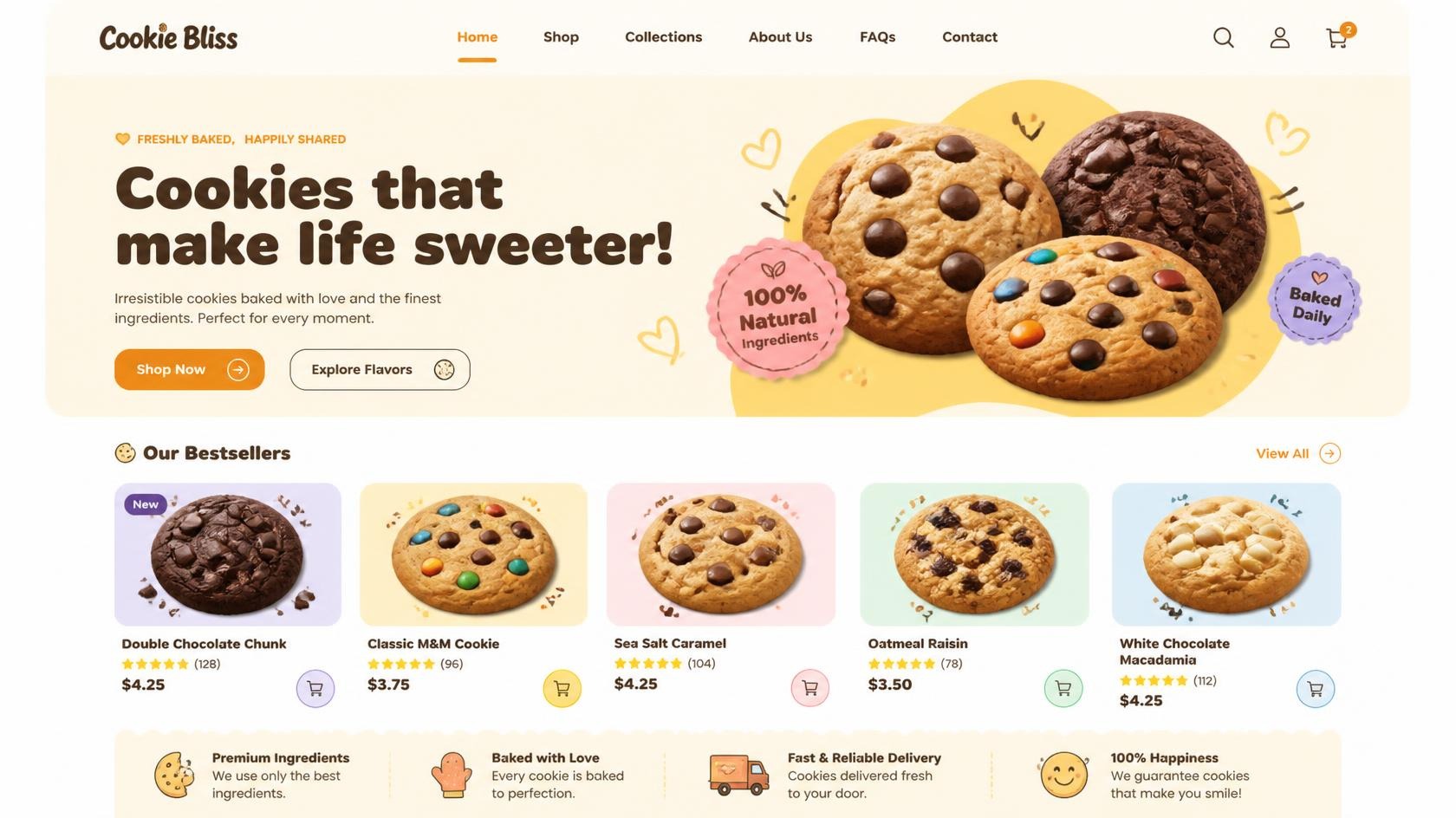
A homepage is the front door to your entire website. It's designed for exploration — it introduces who you are, what you offer, and gives visitors multiple paths to navigate deeper into your site based on their own interests. It has to serve everyone: existing customers, new prospects, job seekers, journalists, and casual browsers alike.
A landing page is a standalone page built for one purpose: converting a specific visitor, who arrived with a specific intent, into a specific action. There is no navigation menu pulling attention elsewhere, no competing messages, and no ambiguity about what the visitor should do next. Every element on the page exists to serve that single conversion goal.
Put simply: a homepage is designed to be explored. A landing page is designed to be acted on. That difference in purpose changes everything about how each page should be structured, written, and measured.
Why This Distinction Matters More Than People Think
Marketers who don't distinguish between the two often make one of two costly mistakes:
- Sending paid traffic to the homepage. A visitor clicks a Google Ad for "affordable condo units in Bangkok," lands on a general homepage, and now has to search through a navigation menu to find what they were promised in the ad. Every extra click is a chance to lose them. Conversion rates on this kind of mismatched traffic are consistently and measurably lower than traffic sent to a dedicated landing page built around the same offer.
- Trying to make the homepage do a landing page's job. Some businesses try to cram a single hard conversion goal — like "Book a Free Consultation" — onto a homepage that's also supposed to explain company history, list every service line, and link out to a blog. The result usually satisfies neither purpose well: it's too narrow to properly orient a new visitor, and too cluttered to drive a single conversion effectively.
Understanding the difference isn't just a matter of web design semantics — it directly affects cost-per-acquisition, ad quality scores, SEO performance, and ultimately, revenue.
Homepage: Purpose, Structure, and Best Practices
What a Homepage Is For
The homepage exists to answer three questions almost instantly, for almost any type of visitor:
- Who are you?
- What do you do?
- Where do I go from here?
It's inherently a branching page. Unlike a landing page, it doesn't assume the visitor already knows what they want — it has to accommodate someone who found you through organic search, a referral, word of mouth, a business card, or a Google Maps listing, each of whom may be looking for something different.
Typical Homepage Structure
A well-built homepage generally includes:
- A primary navigation menu — the backbone of the page, letting visitors self-select where to go: Services, About, Pricing, Blog, Contact, and so on.
- A hero section that communicates brand identity and value proposition within seconds.
- Multiple calls to action, often pointing to different destinations depending on visitor intent (e.g., "View Services," "See Pricing," "Read Our Blog," "Get a Quote").
- Trust signals — client logos, testimonials, awards, or years in business — aimed at building broad credibility rather than pushing toward one specific offer.
- Internal links to deeper site sections, category pages, or cornerstone content.
What Good Homepage SEO Looks Like
From an SEO standpoint, the homepage typically targets broad, brand-level, or category-level keywords — think "digital marketing agency Bangkok" rather than "SEO audit for ecommerce websites." It usually carries the site's strongest domain authority and the most inbound backlinks, which makes it a natural anchor for a site's overall SEO health, even if it isn't optimized to rank for narrow, high-intent search terms.
How Homepage Success Is Measured
Homepage performance is usually judged on:
- Time on page and pages per session — is the page successfully guiding visitors deeper into the site?
- Bounce rate — are visitors leaving immediately, or engaging further?
- Navigation click-through patterns — which sections are visitors actually choosing to explore?
Notice that none of these metrics is a single, hard conversion number. That's intentional — a homepage's job is to orient and route, not to close.
Landing Page: Purpose, Structure, and Best Practices
What a Landing Page Is For
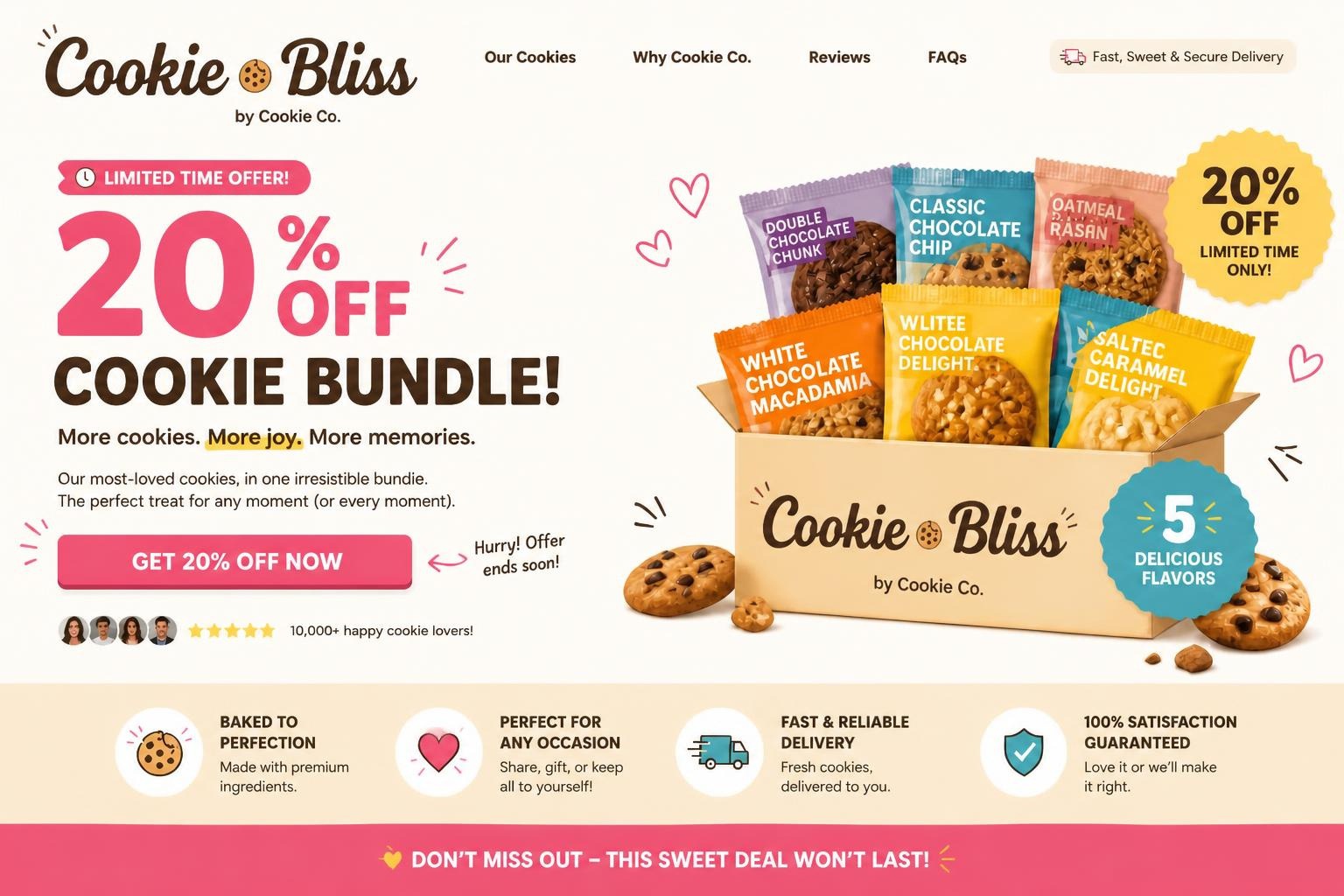
A landing page is built around one offer and one action. It might exist to:
- Capture leads through a form (e.g., "Get a Free Quote")
- Drive a specific purchase (e.g., "Buy Now — Limited Time Offer")
- Register visitors for an event or webinar
- Support a specific ad campaign or promotion with matching, focused messaging
The single most important design principle behind a landing page is message match — the headline, imagery, and offer on the landing page must mirror exactly what the visitor was promised in the ad, email, or search result that brought them there. If someone clicks an ad for "20% Off Website Redesign Packages," the landing page headline should say exactly that — not force the visitor to hunt for it.
Typical Landing Page Structure
A well-built landing page is intentionally narrow and usually includes:
- No main navigation menu, or a drastically simplified one. This is one of the most important — and most counterintuitive — differences from a homepage. Every navigational link is a potential exit ramp away from the one action you want the visitor to take.
- A single, focused headline that matches the ad, email, or search query that drove the click.
- One primary call to action, repeated multiple times down the page rather than competing with several different CTAs.
- Supporting proof elements directly relevant to that one offer — testimonials, case studies, or statistics specific to the product or service being promoted, not general company credibility.
- A short, focused form (for lead-gen pages) asking only for the information genuinely needed at that stage.
- Urgency or scarcity elements where genuinely applicable (limited-time pricing, limited slots), used to support the conversion goal rather than as generic decoration.
What Good Landing Page SEO Looks Like
Landing pages are typically optimized around long-tail, high-intent keywords — specific enough to match exact search intent, such as "ecommerce SEO audit for Shopify stores" rather than a broad category term. Landing pages built primarily for paid traffic sometimes de-prioritize organic SEO altogether, since their job is to convert whoever clicks through from a specific paid or referral source — but landing pages built to also capture organic long-tail search traffic still benefit heavily from tight keyword focus and fast load times, both because those are strong ranking factors and because slow pages quietly kill conversion rates regardless of traffic source.
How Landing Page Success Is Measured
Landing pages are judged almost entirely by:
- Conversion rate — the percentage of visitors who complete the intended action.
- Cost per conversion, particularly for paid traffic.
- Form completion rate, for lead-gen pages specifically.
- A/B test performance — landing pages are far more commonly tested and iterated on than homepages, precisely because they have one measurable goal to optimize against.
Side-by-Side Comparison
| Factor | Homepage | Landing Page |
| Primary goal | Orient and route visitors | Convert visitors on one specific action |
| Audience | Broad — everyone who reaches the site | Narrow — visitors from a specific campaign or source |
| Navigation | Full menu, multiple exit paths | Minimal or none |
| Calls to action | Multiple, often varied | Single, repeated |
| Messaging | General brand value proposition | Message-matched to a specific offer or ad |
| SEO targeting | Broad, brand, or category keywords | Long-tail, high-intent keywords |
| Success metric | Engagement, navigation, time on site | Conversion rate, cost per conversion |
| Testing frequency | Occasional redesigns | Frequent A/B testing |
| Typical traffic source | Direct visits, brand search, general organic | Paid ads, email campaigns, specific
offers |
Common Mistakes Businesses Make
Sending every ad to the homepage. This remains one of the single most common — and most fixable — reasons paid campaigns underperform. A campaign promoting a specific service should point to a landing page built around that exact service, not a general homepage the visitor now has to navigate manually.
Building a landing page that still has full site navigation. Some businesses build what they call a "landing page" but leave the main menu intact out of habit or fear of feeling "incomplete." This defeats the entire purpose — every navigation link is a distraction competing with the one action the page exists to drive.
Trying to rank a landing page for broad keywords. A landing page built around "Book Your Free SEO Audit" is not going to rank well for a broad term like "digital marketing," and trying to force it to do so usually waters down the focused messaging that made it effective as a conversion tool in the first place.
Neglecting the homepage's role in overall SEO. Because landing pages get so much attention in paid campaigns, homepages sometimes get treated as an afterthought. But the homepage is usually a site's strongest page in terms of domain authority and backlinks, and it plays an outsized role in how search engines and AI-driven answer engines assess the overall credibility and structure of the entire site.
Assuming one type of page can replace the other entirely. A landing page cannot replace a homepage's function for organic visitors trying to understand the full scope of a business, and a homepage cannot replace a landing page's focused conversion performance for paid or campaign-driven traffic. A mature marketing strategy uses both, deliberately, for different jobs.
Which One Does Your Business Actually Need?
In practice, this isn't really an either-or decision — nearly every business benefits from having both, used for their respective strengths:
- Use the homepage as the default destination for organic traffic, brand searches, referrals, and any visitor who doesn't yet have a specific offer in mind.
- Use a landing page for every paid campaign, every specific promotion, every email send with a clear call to action, and every scenario where you can predict exactly what the visitor is expecting to find when they click through.
A useful test: if you can finish the sentence "I want this visitor to ___" with one specific action, and you know exactly what messaging brought them to the page, you need a landing page. If you're trying to serve many different visitor intents at once under one general brand umbrella, you need a homepage.
Businesses that treat this as a technical detail rather than a strategic decision are usually the ones who wonder, months later, why their ad spend isn't converting the way it should. Getting the two pages right — and getting the underlying technical foundation (page speed, mobile responsiveness, clean code, proper structure) solid enough to support both — is one of the more overlooked levers behind stronger marketing performance.